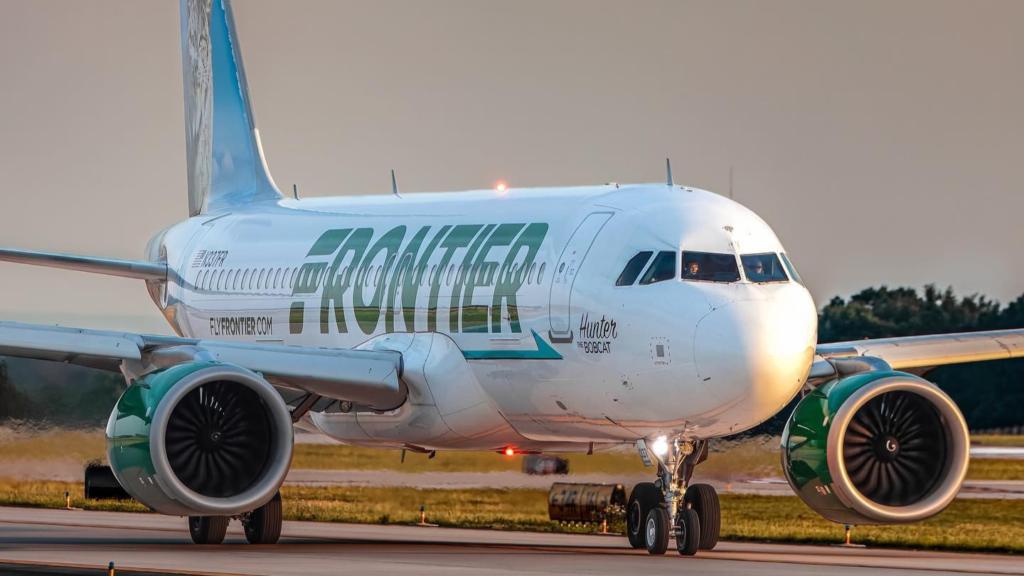
- A Frontier Airlines Airbus A321neo narrowly avoided two trucks on a taxiway at LAX late Tuesday night.
- The pilots performed emergency braking from 15 mph to prevent a collision with the service vehicles.
- The FAA is investigating the incident, which occurred in an ATC blind spot near Terminal B.
(LOS ANGELES, CALIFORNIA) — If you’re choosing between major hubs, the bigger takeaway from Frontier’s near miss at LAX is simple: busy airports can still be safe, but ground operations matter just as much as takeoff. For travelers, this is a reminder to pay attention to tight connections, overnight schedules, and irregular-operations risk.
Frontier Airlines flight F9-3216 narrowly avoided two trucks on a taxiway at Los Angeles International Airport late Tuesday night. The Airbus A321neo was headed to Atlanta, and the crew’s fast braking likely prevented a much worse outcome.
The incident stands out for another reason. It’s a useful comparison point with a March 22, 2026 Air Canada Express collision at LaGuardia. Both involved ground movement, but the control environments were very different.
Frontier at LAX vs. LaGuardia ground incident
| Feature | Frontier Airlines at LAX | Air Canada Express at LaGuardia |
|---|---|---|
| Date | April 8, 2026 | March 22, 2026 |
| Airport | Los Angeles International Airport | LaGuardia Airport |
| Aircraft | Airbus A321neo | Air Canada Express aircraft |
| What happened | Two trucks cut off the jet on taxiway K near taxiway B | Collision involving a fire truck |
| Speed context | About 15 mph | Ground-vehicle collision during operations |
| Control environment | Trucks were outside direct tower visibility in a blind spot | Ground vehicles operated under different control conditions |
| Outcome | No injuries; flight continued | Fatal outcome in that separate incident |
For travelers, the comparison matters because it shows how airport design and vehicle control can affect risk on the ground. It also explains why taxi delays, extra caution, and route changes happen at busy hubs.
What happened at LAX
The Frontier jet was pushing back from Terminal B around 11:30 p.m. on April 8 when two trucks suddenly cut across its path on taxiway K near taxiway B. The aircraft was moving slowly, at about 15 mph.
That gave the pilots just enough time to stop. They reported that they had to “slam on the brakes” to avoid impact.
The plane carried 217 passengers and seven crew members. Nobody was hurt.
⚠️ Heads Up: Even low-speed taxi incidents can become serious fast. If your flight is delayed on the ground, that can be the safest possible outcome.
The aircraft was an Airbus A321neo, a narrow-body jet widely used on domestic and medium-haul routes. Frontier was operating the flight to Atlanta Hartsfield-Jackson Airport, one of the busiest hubs in the world.
Why this matters for travelers
This was not an air-to-air emergency. It was a ground movement scare. But travelers should still care.
LAX is one of the most complex airports in the country. Aircraft, service vehicles, and other ground traffic all move through the same crowded system. When you fly through a hub this busy, small mistakes on the surface can ripple into delays, missed connections, and reroutes.
If you were connecting through LAX that night, even a short taxi interruption could have mattered. A delayed pushback can turn a tight connection into a misconnect, especially on late-night departures.
For frequent flyers, this is the kind of event that reminds you to build in buffer time at LAX. That’s especially true if you’re chasing status on a same-day connection.
Aircraft and occupancy details
| Detail | Information |
|---|---|
| Aircraft | Airbus A321neo |
| Passengers | 217 |
| Crew | 7 |
| Route | Los Angeles → Atlanta |
| Departure timing | Around 11:30 p.m. on April 8 |
| Landing | Early on April 9 |
The A321neo is a fuel-efficient aircraft, and Frontier leans heavily on it across its network. For passengers, that usually means a standard no-frills cabin with a lot of seats packed into a single-aisle jet.
That matters for planning. Frontier tickets are usually cheapest when you travel light. But fees can add up fast if you bring a carry-on, check a bag, or want a seat assignment.
For this flight, though, the bigger story was not onboard comfort. It was the quick reaction on the taxiway.
Air traffic control and visibility problems
Controllers could not see the incident from the tower because that section of the airfield sits in a blind spot. ATC asked about truck markings, but the crew could not provide identifying details.
That’s a big deal. It means the tower did not have a full view of what happened. It also helps explain why airport ground procedures rely on multiple layers of coordination, not just visual observation.
Brian Sinclair, a former F-18 pilot and U.S. Naval Academy instructor, pointed to three specific blind spots for ground controllers at LAX. That kind of layout challenge is one reason airport ground ops can get complicated so quickly.
At large airports, the airport map is almost as important as the weather forecast. A confusing intersection can create risk even on a clear night.
Official response and investigation
Frontier said no injuries were reported and praised the crew for their vigilance and professionalism. That’s exactly the right response after a close call like this.
The FAA is investigating the near miss. LAX has not identified the truck operators or drivers.
That investigation will matter for airport operations, not just this one flight. If the trucks were in the wrong place, the airport may need to review ground-control procedures. If the issue was communication, the fixes could be different.
💡 Pro Tip: If you often connect through LAX, choose longer layovers when possible. Ground delays can be short, but they can still wreck a 30-minute connection.
Mileage and points implications
For Frontier flyers, this incident does not change how Frontier Miles works. But it still affects the kind of travel planning loyal customers care about.
Frontier is a low-cost carrier, so the biggest points question is usually not elite upgrades. It’s whether you can keep the trip cheap enough to make cash bookings worthwhile.
Here’s the practical impact:
- No miles change: A ground incident like this does not alter earning rules.
- Possible delay risk: A taxi interruption can still affect same-day connections.
- Award value remains limited: Frontier Miles redemptions are usually best on short hops where cash fares are high.
Compared with legacy carriers, Frontier travelers usually trade perks for price. There’s no business-class upgrade ladder to worry about here. The bigger concern is total trip cost.
If you’re flying Frontier through a crowded hub like LAX, the cheapest fare is not always the best value once bags and seat fees are added.
Competitive context
LAX is a different kind of airport experience from many Frontier markets. It handles huge volumes of traffic, wide-body international flying, and constant ground movement. That creates more opportunities for taxiway conflict than a smaller station.
By comparison, airports with simpler ground layouts can be easier to manage. But they also may offer fewer nonstop options. That’s the tradeoff.
For travelers, the question is not whether LAX is “bad.” It is whether you should plan differently there.
If you can choose between a tight LAX connection and a slightly longer itinerary through another hub, the longer connection may be the smarter play. This is especially true on late-night departures.
Frontier’s business model also means it competes on price, not cushion. If a delay snowballs, the airline is less likely to offer the same flexibility you’d get on a larger premium carrier.
Choose Frontier if you want low fares and can travel light
Frontier makes sense when your priority is the lowest possible ticket price. That is especially true if:
- You are taking a short domestic trip.
- You can fly with a small personal item.
- You are not relying on a tight connection.
- You are not chasing premium cabin comfort.
Frontier can still be a smart buy when the fare difference is large. On some routes, the gap versus a legacy carrier can easily be $100 or more each way.
That said, the airline’s low base fares can disappear quickly once extras are added. If you need a carry-on, checked bag, or seat selection, compare the full trip cost before booking.
Choose a legacy carrier if schedule flexibility matters more
A legacy airline may be the better pick if:
- You have a connection through LAX.
- You need more flexibility after a delay.
- You want elite-qualifying mileage earning.
- You value rebooking options and airport support.
That’s especially true if you’re traveling for work or on a tight schedule. A few extra dollars upfront can be worth it if your itinerary is more protected.
For frequent flyers, the mileage math matters too. Legacy carriers often reward higher fares with better elite earning, while ultra-low-cost airlines keep the base fare low and charge for everything else.
The bigger lesson from this close call
The Frontier incident did not end in injury, and that’s the good news. The crew reacted fast, the aircraft stopped in time, and the flight still reached Atlanta early on April 9.
But the event is a reminder that ground safety is part of the flying experience. The safest airfare is not just the cheapest one. It is the itinerary that fits your schedule, connection risk, and tolerance for disruption.
If you’re flying through LAX in the coming weeks, give yourself extra time, avoid razor-thin connections, and watch for schedule changes on late-night departures. If you can book a nonstople or a longer layover, that is the smarter move until the FAA review is complete.