- A Myanmar National Airlines plane was damaged by suicide drones at Myitkyina Airport on February 20.
- The ATR 72-600 sustained significant fuselage and cockpit damage while passengers were boarding flight UB662.
- Travelers are advised to prioritize flexible, rerouted itineraries to avoid potential security delays or cancellations.
(MYITKYINA, KACHIN STATE, MYANMAR) — If you’re flying in or out of Kachin State soon, the safest “travel move” right now is flexibility: keep your trip possible, but book changeable tickets and avoid tight connections through Myitkyina until operations settle.
A Myanmar National Airlines ATR 72-600 was damaged by multiple FPV “suicide” drones at Myitkyina Airport on Feb. 20, 2026, at about 8:12 p.m. local time. The aircraft was operating as flight UB662 on the Myitkyina–Mandalay route. The damage happened on the ground while passengers were boarding. No injuries or fatalities were reported among passengers or crew at the time of reporting.
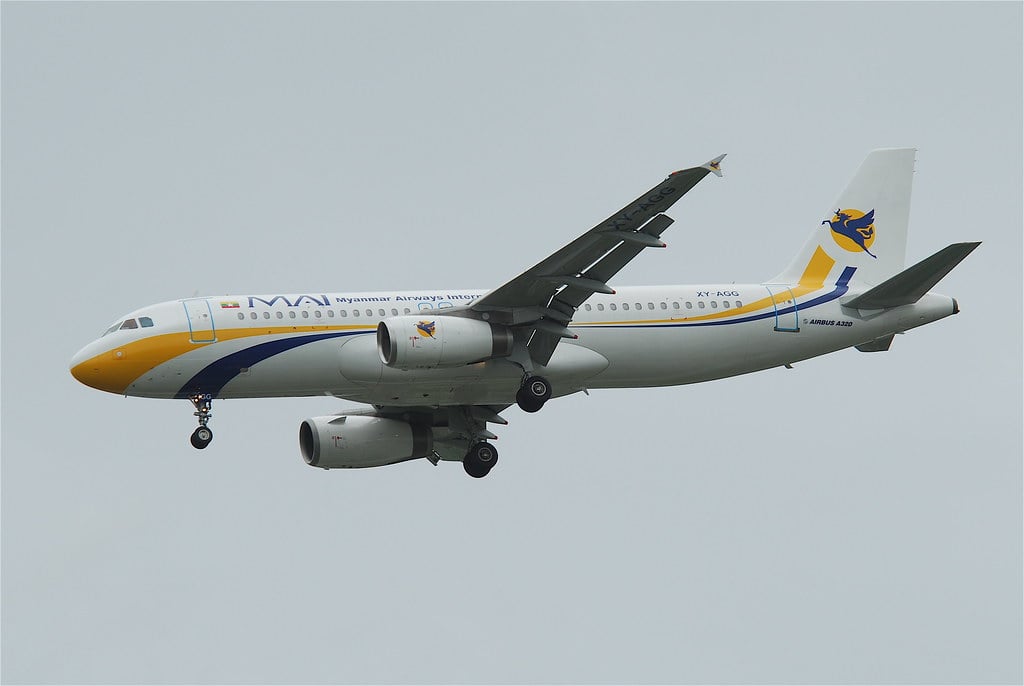
This is a comparison guide for travelers deciding between two realistic options: flying on the direct Myitkyina–Mandalay service versus rerouting to reduce airport exposure and add schedule resilience.
Quick recommendation
Choose a reroute (Option B) if you can—especially if you have onward connections, family travel, or any hard deadline. You’ll trade time and hassle for more buffer.
Choose the direct flight (Option A) only if you must, and only with flexibility built in. That means a changeable fare, daylight arrival if available, and no same-day must-make connections.
Side-by-side comparison: Direct vs reroute after the Myitkyina incident
| Factor | Option A: Direct flight from Myitkyina (MYT) on Myanmar National Airlines | Option B: Reroute to reduce risk and add buffer (extra segment or overnight) |
|---|---|---|
| What you’re booking | A nonstop domestic hop, commonly on a turboprop like the ATR 72-600 | A multi-step plan that avoids “must-make” timing through MYT |
| Time cost | Fastest when it operates normally | Slower by design, often adds hours or a night |
| Disruption risk | Higher sensitivity to airport interruptions and security posture changes | Lower sensitivity, because you’ve built slack into the trip |
| Comfort | Short flight, turboprop cabin feel, tighter overhead bins | Depends on aircraft and routing, but you can pick longer segments on jets when available |
| Cost | Sometimes cheapest on paper | Often costs more once you add extra legs or an overnight |
| Baggage | Best with carry-on only, since re-accommodation can be messy | Checked bags are safer when you have longer connections and fewer same-day constraints |
| Miles/points | Limited “easy wins” for most global points collectors | Better chance to earn on a partner-friendly ticket, depending on the airline mix |
| Best for | Essential trips with local support and flexible timing | Connections, business travel, families, and anyone who can’t gamble with the clock |
1) Incident overview: what happened and why travelers should care
The affected aircraft was a Myanmar National Airlines ATR 72-600, damaged at Myitkyina Airport in Kachin State. It was operating as flight UB662 from Myitkyina to Mandalay.
The reported attack method was multiple first-person-view (FPV) suicide drones. The strike occurred while the plane was on the ground at the airport, with boarding underway.
For travelers, the key impact is simple: a security incident at an airport can cause sudden stoppages. That can mean delayed departures, aircraft swaps, or last-minute cancellations. Even if flights resume quickly, the schedule after a disruption can stay unstable for days.
2) Aircraft and damage details: what it means for your flight
Reporting identified the aircraft as an ATR 72-600, registration XY-AMI. That’s a common regional turboprop used for short domestic sectors.
The reported damage pattern matters to passengers because it speaks to airworthiness and the likelihood of a quick return to service. Damage was described across:
- The nose and cockpit area
- Mid-fuselage sections
- Tail lighting and rear fuselage
Images and footage circulating online showed scorch marks near the cockpit and pierced sections under the tail. A small fire was also reported near the rear fuselage, with visible scorching.
In practical terms, that combination usually means the aircraft is grounded pending inspection. Even if the airline has spare aircraft, turboprop fleets are often small. When one airframe goes out of rotation, schedules can unravel fast.
This is also where passenger expectations should be calibrated. On a domestic turboprop route, a “simple delay” can turn into a same-day cancellation if the next available aircraft is hours away.
⚠️ Heads Up: If you’re booked on a Myitkyina flight this week, assume your aircraft assignment may change. Pick seats and baggage plans with that in mind.
3) Security response and immediate aftermath: why operations can still be uneven
Reports said air defenses intercepted some drones. Others reportedly crashed on the runway. Those crashes were said to have occurred without exploding inside the airport.
Explosive devices were later defused, and were described as RPG-type warheads.
For airport operations, runway events are a big deal even when there are no casualties. A runway must be treated as suspect until it’s checked, swept, and cleared. That can lead to:
- Temporary pauses in arrivals and departures
- Aircraft holding or diversions
- Knock-on delays as crews time out
The human impact is still the headline travelers should hold onto: no injuries were reported in initial accounts. But operational friction can continue after the all-clear, especially when security posture rises.
4) Attribution and statements: competing claims, and what’s confirmed
Myanmar authorities attributed the attack to the Kachin Independence Army (KIA) and allied People’s Defence Force (PDF) groups. Officials also characterized the strike on civilian aviation as a “war crime” under international law. That is a reported government position, not an independent legal finding.
A KIA spokesperson, Colonel Naw Bu, denied involvement in comments reported by the BBC. He said the group has no policy of targeting civilian aircraft.
One detail travelers should note is the cadence. This was reported as the second drone attack on Myitkyina Airport in eight days. Reporting placed the prior FPV strike on Feb. 12, followed by the Feb. 20 incident at about 8:12 p.m. local time.
That short interval is why airlines and airports often get conservative fast. Even limited repeat events can lead to stepped-up screening, changing access rules, and shifting flight schedules.
5) Context: why Myitkyina Airport matters for civilian travel
Myitkyina Airport is a key civilian link in Kachin State. It connects residents and business travelers to major cities, including Yangon and Mandalay.
When airport security risk rises, the harm to travelers often comes in three forms:
- Unreliable schedules that break connections
- Reduced confidence that pushes people toward slower routes
- Extra friction at the airport, including longer processing and access controls
Reporting also described escalation dynamics in the region, including increased airstrikes. That matters for civilian aviation because it can shape airspace management, airport readiness, and on-the-ground security posture.
ACLED has also been cited in reporting that Myanmar ranks among the top countries globally for drone operations, after Ukraine and Russia. For travelers, the takeaway is not alarmism. It’s that drones have become a recurring factor around infrastructure, including transport nodes.
6) Key actors referenced: who’s who for travelers
- Myanmar National Airlines: The operator of the damaged aircraft and the carrier on the UB662 sector.
- Kachin Independence Army (KIA): An armed group named by Myanmar authorities as responsible, and which issued a denial.
- People’s Defence Force (PDF): Groups allied with resistance efforts, also cited by authorities in attribution.
- Myanmar government/junta authorities: The officials issuing statements and directing security response.
For passengers, this matters because public statements can affect airport access rules quickly. They can also influence whether carriers add extra screening or adjust schedules.
Option A: Keep the direct Myitkyina flight (when it makes sense)
You book the nonstop and accept that airport disruptions may hit with little notice.
Choose Option A if:
- Your trip is essential and timing is flexible
- You can travel with carry-on only
- You can handle a same-day cancellation without missing something critical
What to do to make Option A less painful
- Book the most flexible fare you can afford. Fee-free changes are worth real money during disruption weeks.
- Avoid tight same-day connections in Mandalay. Pad your itinerary by at least half a day.
- Screenshot your booking and baggage rules. Rebooking lines can be slow when systems get stressed.
Comfort reality check: ATR 72-600
The ATR 72-600 is a workhorse. It’s also a turboprop, with more cabin noise than a jet and smaller overhead bins. On short sectors, that’s fine. On a disrupted day, it can mean more gate-checking and slower boarding.
Option B: Reroute for resilience (the safer play for most travelers)
Option B is less about luxury and more about controlling failure points. You avoid building an itinerary where one airport interruption ruins your entire trip.
Choose Option B if:
- You’re connecting to an international flight
- You’re traveling with family, medical needs, or tight deadlines
- You’re checking bags and can’t risk misconnects
What Option B can look like
- Add an overnight before your “must-make” flight
- Use an itinerary that gives you a long connection in a larger hub
- Split the trip: get to a major city first, then fly onward
This can feel expensive. But “cheap and missed” often costs more once you add a new ticket, hotels, and lost time.
Miles and points: what frequent flyers should consider
Myanmar domestic flying can be tricky for global points collectors. Many local tickets don’t plug neatly into the big alliance ecosystems.
Here’s the practical angle:
- If you’re chasing elite status with a major global program, a domestic ticket on a local carrier may earn little or nothing.
- If you reroute onto an airline that credits to your program, the extra segment can help with mileage earning and status metrics.
- If you’re redeeming points, look for routings that keep you on carriers where you can actually use miles at a fair rate.
The best “points move” in a disruption environment is often simple. Pay a bit more for a fare you can change, rather than gambling on a rock-bottom ticket with penalties.
Competitive context: how this compares to travel in other high-risk regions
Airports facing repeat incidents often respond the same way worldwide:
- More perimeter security and access limits
- More last-minute operational changes
- Greater variance in on-time performance
For travelers, the comparison point isn’t another Myanmar route. It’s any market where a single airport can become a choke point. In those markets, itineraries with slack outperform “perfect” schedules every time.
Choose X if / Choose Y if (fast scenarios)
Choose the direct Myitkyina flight (Option A) if…
- You can depart a day earlier than needed.
- You can afford to be stuck without a hotel shortage panic.
- You’re traveling light and can pivot quickly.
Choose the reroute (Option B) if…
- You have an international departure within 24 hours.
- You’re on a fixed work schedule.
- You’re traveling with kids, elders, or lots of checked baggage.
Verdict that balances cost, time, and disruption risk
A direct Myanmar National Airlines hop can still be the right pick for essential travel inside Kachin State. But after a second reported drone incident in eight days, the “best” itinerary for most passengers is the one that can fail gracefully.
If you must fly from Myitkyina in the next two weeks, book a changeable ticket, avoid same-day tight connections, and plan for carry-on only—because the cost of one cancellation can dwarf the savings of the cheapest fare.