- Newark Liberty International Airport remains fully operational today following a temporary ground stop last week.
- A JetBlue Airbus A320 evacuated 122 passengers after an engine failure and cockpit smoke report.
- Travelers should monitor inbound aircraft status to anticipate potential cascading delays or gate holds.
(NEWARK, NEW JERSEY) — Newark Liberty International Airport is open today, but last week’s JetBlue Flight 543 incident is a good reminder to have a backup plan if you’re flying through EWR. If you’re traveling soon, your best move is usually to keep your Newark booking and watch your inbound aircraft closely, while pricing a “Plan B” from JFK, LaGuardia, or even Philadelphia.
The confusion started because people saw “Newark Airport closed” posts after a dramatic runway-area response. What actually happened was a temporary ground stop on Wednesday, February 18, 2026. Normal operations resumed that evening. As of Monday, February 23, 2026, Newark Liberty International Airport is not closed.
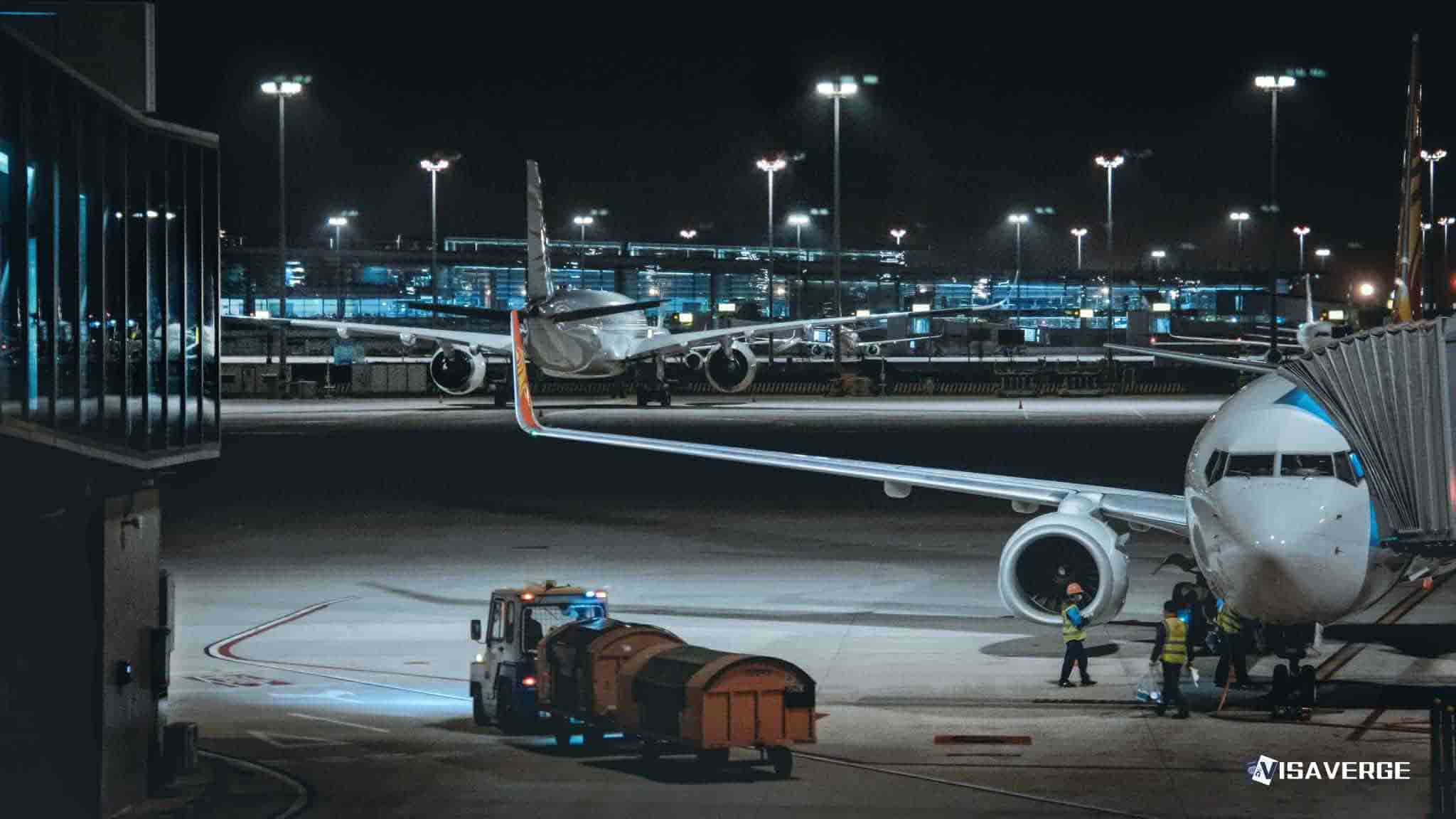
This guide breaks down what happened, what it did to airport operations, and the smartest choice for your next trip: stick with Newark, or switch airports.
Overview and current status: was Newark actually closed?
Newark Liberty International Airport (EWR) is not currently closed. The incident that drove the headlines happened on Wednesday, February 18, 2026. Operations resumed that same evening.
It also helps to decode the terminology you’ll see in airline alerts.
- “Closed” (practically speaking): flights can’t take off or land at all, often for a sustained period.
- “Ground stop”: air traffic control temporarily halts arrivals into an airport. Departures may continue, but the system often slows.
- “Reduced flow”: arrivals and departures still happen, but at a lower rate. That creates long lines for takeoff and landing slots.
On February 18, the key pain point for travelers was the ground stop and the backlog after it lifted. That’s when delays ripple into the night.
Incident details: JetBlue Flight 543 return and evacuation
The event centered on JetBlue Flight 543, operated by an Airbus A320, scheduled from Newark to Palm Beach International Airport (PBI). Shortly after takeoff, the crew reported an engine failure and returned to Newark.
The aircraft landed safely. After landing, there was a report of smoke in the cockpit. That combination can trigger a very conservative playbook. Even after a safe landing, crews may order an evacuation if they can’t quickly rule out fire or a smoke source.
That’s why passengers can end up on slides even when the landing itself is normal. The priority is getting everyone away from a potentially worsening hazard.
An incident like this can also affect the whole field fast. If an aircraft stops on a taxiway, or if emergency vehicles need to stage near an active movement area, the airport may have to pause traffic. Runways and taxiways are tightly choreographed. The response requires space, time, and clear routes for fire and rescue.
The big traveler question: keep Newark, or switch airports?
Most travelers have three realistic options in the New York area. Each has tradeoffs in cost, schedule, comfort, and points earnings.
Side-by-side comparison: EWR vs JFK vs “other airports”
| Factor | Keep EWR (Newark) | Switch to JFK | Switch to LGA / PHL |
|---|---|---|---|
| Best for | United flyers, many NJ travelers, fast access from Manhattan via rail | Long-haul variety, many airline choices, easier “same-day swap” options | Domestic trips (LGA), or a backup hub (PHL) |
| Disruption recovery | Strong if you’re on United, weaker on smaller carriers | Strong due to flight volume, but traffic delays are real | LGA has limited long-haul; PHL adds distance but has depth |
| Typical rebooking options | Best within the same airline, especially United | Often more same-day choices across airlines | LGA is great for short hops; PHL can rescue you during NYC crunches |
| Points and status | United MileagePlus earns well on paid fares, plus solid elite benefits at EWR | More partner options depending on alliance and airline | Depends heavily on airline; fewer long-haul premium choices |
| Ground access | AirTrain + rail is predictable | Can be slow by car at peak times | LGA is quick from Queens; PHL is a longer trek |
| If you’re UAE-bound | EWR can be excellent if your routing works | JFK offers many long-haul alternatives | PHL can connect, but adds complexity |
My quick recommendation: If your flight is within the next 72 hours, keep EWR unless your airline already shows rolling delays or aircraft swaps. If you’re booking fresh for a high-stakes trip, price both EWR and JFK.
Impacts on Newark operations: ground stop, reopening, and the delay hangover
A ground stop is mainly an arrivals tool. The FAA uses it to meter inbound flights when an airport can’t accept arrivals safely. Departures can still be affected, because gates fill up and taxiways clog.
Even after the ground stop ends, you can see lingering disruption for hours. Here’s why:
- Queueing: inbound aircraft stack up in the air or wait to depart other airports.
- Diversions: some flights land elsewhere, then need new crews or new aircraft positioning.
- Crew duty limits: if a crew times out, the airplane may be ready but the crew isn’t legal to fly.
- Gate holds: you land, but there’s no gate, because earlier flights are still parked.
You may also see different “reopen” times floating around online. That’s normal during a fast-moving response. There’s often a phased return:
- Movement area cleared enough to resume some ops.
- Arrival rates increased as staffing and spacing normalize.
- Full schedule recovery later, sometimes close to midnight.
For travelers, the practical point is this: “open” does not mean “back to normal.” It often means “moving again, slowly.”
Passenger count and safety response: what we know, without the drama
JetBlue Flight 543 had 122 passengers onboard. Reports indicated one passenger was taken to a local hospital for chest pains. No other injuries were reported.
Smoke reports are treated seriously because smoke can precede fire. It can also be an electrical or ventilation issue. Either way, crews often choose the fastest path to get everyone outside and away from the aircraft.
The root cause is determined later through investigation. Early details can change as investigators review maintenance history, crew reports, flight data, and physical evidence.
Who did what: Port Authority, FAA, and JetBlue (and what that means for you)
During an airport emergency, each group has a distinct job. Knowing who controls what helps you get better information fast.
- Port Authority of New York and New Jersey: runs the airfield and coordinates emergency response. It can suspend operations to keep responders safe and clear routes.
- FAA: manages traffic flow, including ground stops and delay programs. It also initiates the formal investigation process.
- JetBlue: handles the aircraft, crew, and passenger support. It also coordinates rebooking and customer care.
This also ties into passenger protections and expectations. In a disruption like this, airlines typically focus on:
- Getting you rebooked on the next available flight, sometimes on a later date.
- Providing updates through official channels, especially the app and gate agents.
- Offering refunds when you choose not to travel, depending on the situation and ticket rules.
The catch is that airport-wide events can create tight inventory fast. That’s why travelers who act early usually get better rebooking options.
⚠️ Heads Up: During a ground stop, your departure can look “on time” until the inbound aircraft or crew gets stuck. Always check the inbound flight status.
Miles, points, and elite status: how airport disruptions hit your rewards
Irregular operations can quietly change the value of a trip for points and status chasers.
Here’s what to watch:
- Same-day rebooking can change your earning. If you move to a different fare class, your miles and elite credits may shift.
- Partner rebooking can be tricky. If your airline puts you on another carrier, earnings might not match your original plan.
- Award tickets need special care. If you booked with points, insist the airline protects your award space or reissues without repricing when possible.
If you’re chasing status, keep an eye on whether your rebooked itinerary still earns what you need. That matters most on revenue-based programs, and on partner tickets with percentage-based accrual.
Competitive context matters here too. In the NYC area:
- United has the deepest operation at EWR, which can mean faster recovery.
- Delta tends to have more depth at JFK and LaGuardia.
- American can be a strong fallback via JFK or Philadelphia, depending on your route.
No airline is immune to airport-wide stoppages. The difference is how many spare aircraft, crews, and alternate flights exist in that airport’s network.
Current status and what travelers should monitor (Feb 23, 2026)
As of February 23, Newark is fully resumed, with no ongoing closure. You can still see residual delays on busy banks, especially when weather or ATC constraints stack up.
Before you head to Newark Liberty International Airport, monitor the signals that show trouble first:
- Your airline app: look for rolling delays, gate changes, and aircraft swaps.
- Airport advisories: these confirm local constraints and terminal issues.
- FAA delay programs: these often predict systemwide holds before your airline admits it’s bad.
- Inbound aircraft status: if the plane isn’t on the way, your flight is at risk.
Also confirm boarding time versus departure time. Boarding can shift earlier even when departure slips, due to gate management.
Plan extra time for Newark when the system is recovering. Lines can spike at customer service and bag drop when misconnects pile up.
Use-case scenarios: which choice fits your trip?
Choose EWR if…
- You’re flying United, especially if you want same-day backup options.
- You live in New Jersey, or you can reach EWR by rail quickly.
- You have a short trip where a JFK transfer would add stress.
Choose JFK if…
- You’re booking a high-stakes international itinerary and want more flight choices.
- You want more backup options across airlines in the same day.
- You’re connecting to long-haul routes where JFK has multiple carriers on the same city pair.
Choose LGA or PHL if…
- Your trip is domestic and you can easily switch.
- You want to avoid the densest NYC airspace during peak banks.
- You’re willing to trade distance for a better rebooking safety net (PHL can help).
Nuanced final verdict
JetBlue Flight 543’s engine failure and evacuation created a real, short-term shutdown effect at Newark. It did not create an ongoing closure. The bigger lesson is about how quickly one aircraft on a taxiway can snarl a major airport.
For most travelers this week, Newark remains the right call, especially if it’s the simplest airport for you to reach. If you’re flying for a wedding, a cruise, or an international connection you can’t miss, it’s smart to price an alternate from JFK before you commit.
If you’re traveling in the next few days, check your inbound aircraft and your airline’s app before leaving home, then arrive with extra buffer time for bag drop and gate changes. If your flight starts sliding by 60 minutes or more, rebook early while the best seats and routings are still available.