- U.S. officials arrested Iranian green card holders with alleged regime ties, initiating formal deportation proceedings.
- Nationality alone does not revoke status, as permanent residents retain legal protections despite current 2026 travel bans.
- The government uses removal proceedings and rescission to challenge permanent residency based on security or fraud.
(UNITED STATES) — Secretary of State Marco Rubio moved on April 4-5, 2026 to terminate the legal status of several Iranian-born lawful permanent residents, triggering arrests and deportation proceedings that have drawn fresh attention to how far the U.S. government can go against people who already hold a U.S. green card.
The State Department said Iranian nationals with alleged ties to the Iranian regime were arrested after Rubio acted. Those cases involved Hamideh Soleimani Afshar and her daughter, and separately Seyed Eissa Hashemi and his family.

For green card holders and their relatives, the question reaches beyond those names. It turns on whether lawful permanent resident status can be taken away after it has already been granted, and on the difference between a visa ban, an entry suspension and the loss of permanent residence inside the United States.
U.S. law allows the government to revoke lawful permanent resident status, but not automatically and not by nationality alone. The process generally runs through immigration court and usually rests on allegations such as fraud, crimes, national security concerns or ties to foreign adversaries.
That distinction matters because Presidential Proclamation 10998, effective January 1, 2026, fully suspended entry and visa issuance for nationals of 19 countries, including Iran. Yet the proclamation applies to foreign nationals outside the United States on the effective date who do not already hold a valid visa, and it expressly exempts lawful permanent residents.
The earlier June 2025 proclamation carried a similar carveout for green card holders. In practice, that means nationality-based entry restrictions and post-entry challenges to permanent residence follow separate legal tracks.
Current enforcement against Iranian nationals unfolded against a broader period of U.S.-Iran tension and followed late 2025 visa revocations for Iranian U.N. mission staff. The new cases, however, centered on people who were already living in the United States as lawful permanent residents.
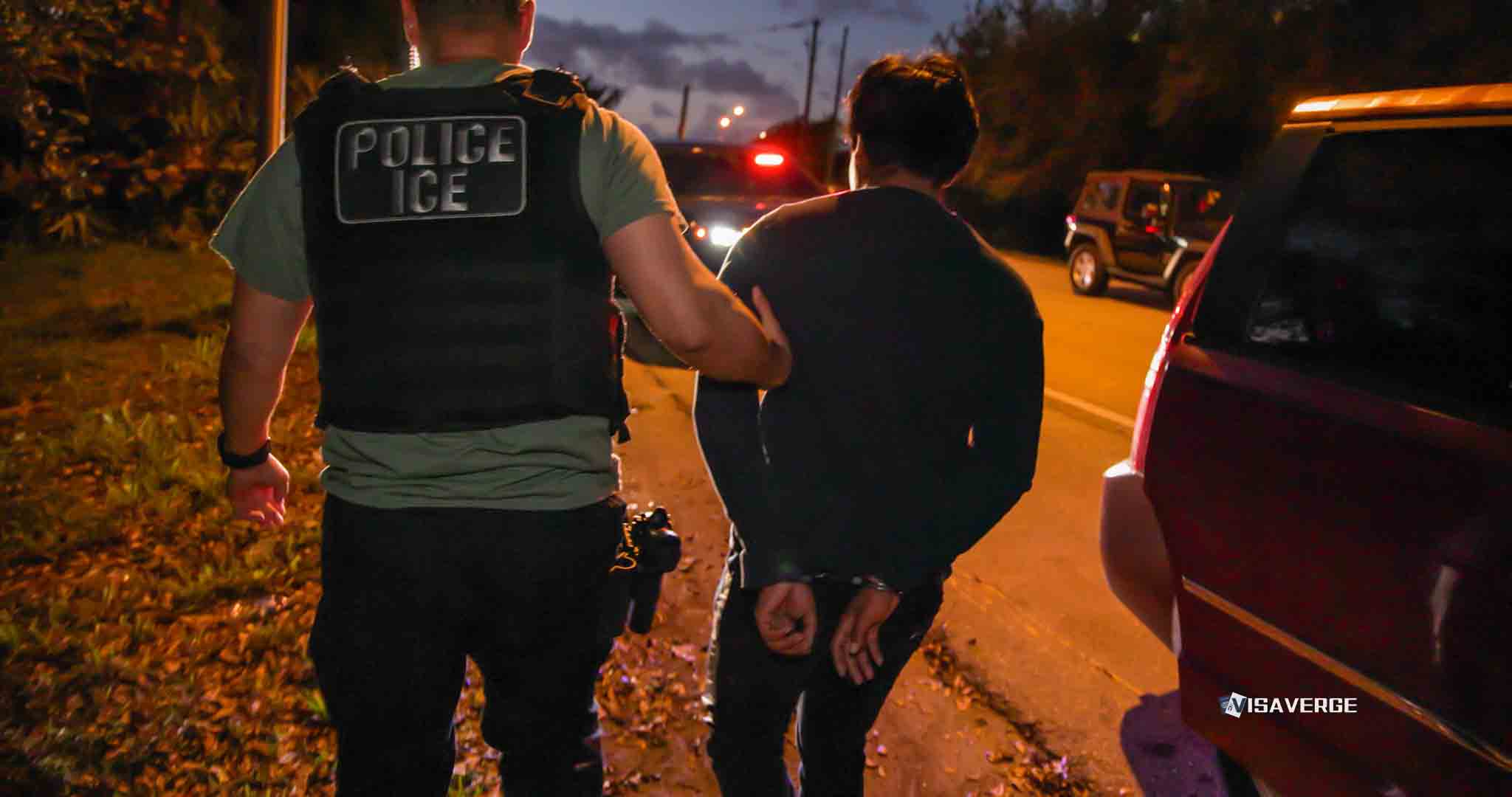
Afshar, identified as the niece of slain IRGC chief Qasem Soleimani, and her daughter had their green cards revoked and were arrested in Los Angeles by ICE for detention and deportation proceedings. Rubio wrote in an X post that Afshar lived a “lavish lifestyle” while publicly supporting the Iranian regime and calling the United States the “Great Satan.”
In a separate case, Hashemi, a Los Angeles psychology teacher and the son of Masoumeh Ebtekar, the spokeswoman for the 1979 U.S. Embassy takeover and Iran’s first female vice president, had his green card revoked along with those of his wife and son. ICE then took them into custody for deportation.
Those cases do not amount to a blanket cancellation of green cards held by Iranian nationals or by nationals of any of the other countries covered by Presidential Proclamation 10998. The White House text draws a line between screening people before admission and removing people who already hold stronger status inside the country.
Another line runs between the plastic card and the status behind it. USCIS says it issues a Permanent Resident Card as evidence of lawful permanent resident status, and that once someone becomes a lawful permanent resident, that status continues until the person naturalizes or loses or abandons status.
USCIS also says a permanent resident loses that status if an immigration judge issues a final removal order. So when officials say a green card was “revoked” or “terminated,” the lasting legal issue is whether the government can sustain the case through the immigration process.
That process usually begins with a Notice to Appear, which starts removal proceedings under INA §240. The person then appears in immigration court under the Executive Office for Immigration Review at the Justice Department.
An immigration judge’s final removal order is required for deportation, and appeals are possible. USCIS policy also says rescission can be used when the agency determines a person was not eligible for adjustment of status at the time permanent residence was granted.
The same USCIS guidance says that, in most cases, the government can and should place the person into removal proceedings under INA 240 with a Notice to Appear rather than rely on rescission alone. USCIS fraud guidance says there must be evidence sufficient to support a finding of fraud or willful misrepresentation.
In other words, revocation targets the underlying lawful permanent resident status, not simply the physical card. The legal exposure lies in whether the government alleges hidden facts, disqualifying ties, fraud, misrepresentation or security-related grounds and can prove them.
The grounds can vary. They include national security concerns, crimes such as aggravated felonies and drug offenses, fraud or misrepresentation, and other factors such as abandonment or public charge, though the current Iran-linked cases have focused on alleged regime ties and security-related concerns.
Rubio can revoke lawful permanent resident status or visas if activities have “potentially serious adverse foreign policy consequences.” Detention can follow in serious cases, and routine checks, investigations or tips can start the process.
For current green card holders, the practical point is narrower than many headlines suggest. Neither the 2025 proclamation nor Presidential Proclamation 10998 automatically strips permanent residence from existing lawful permanent residents inside the United States.
Still, the environment has grown tougher. The Trump administration is reviewing all green cards for nationals of 19 “countries of concern,” and USCIS Director Joseph Edllo confirmed the directive after a National Guard shooting in which Specialist Sarah Beckram was killed.
That review includes roughly 200,000 refugee cases being re-examined, with protections revocable if security issues are found. Pending requests, including those involving Afghans, were suspended.
Even where permanent residence remains intact, green card holders face more scrutiny of past filings. Old immigrant visa forms, adjustment applications, civil documents, travel history and family relationship evidence can all take on renewed importance if the government reopens questions about how status was obtained.
That does not put lawful permanent residents on the same footing as visa applicants abroad. Permanent residence remains a stronger status, and the proclamations in force still exempt existing lawful permanent residents inside the country.
Families outside the United States face a different problem. Travel.State.Gov says the January 2026 rules fully suspended visa issuance for Iranian nationals across immigrant and nonimmigrant categories, with limited exceptions.
That change reaches both immigrant and nonimmigrant visa categories for Iranian nationals. It also came with fewer family exceptions than the June 2025 rules, including the loss of some categorical exceptions that had covered certain immediate-family immigrant visas.
For spouses, parents, children, students and others planning future travel or relocation, that shift can block a case before travel even begins. The obstacle in those situations is not loss of an existing U.S. green card, but the inability to secure a new visa overseas.
Students and exchange visitors fall into that category as well. A headline about green card enforcement can make post-arrival removal appear to be the central issue, but for many people abroad the immediate barrier is visa issuance and admission.
That is why the legal categories matter. Where a full suspension applies, the issue is entry screening and consular processing; where a person already holds lawful permanent resident status, the issue becomes whether the government can unwind that status through removal channels.
The two systems can overlap politically, but they operate differently. Mixing them together can blur the protections that green card holders still retain and the restrictions that visa applicants now face.
Iranian nationals with existing permanent residence are not automatically removable because of their nationality. But if the government alleges fraud, hidden ineligibility, criminal conduct or security-related grounds, it has legal tools to pursue detention and removal.
Overseas relatives, by contrast, can find themselves blocked even when no one has accused them of wrongdoing. Under the 2026 proclamation, the suspension of visa issuance for Iranian nationals has immediate consequences for families trying to reunite and for students trying to begin or continue plans in the United States.
Travel has also become harder to plan. Green card holders can travel, including to Nigeria, but should monitor reentry risks amid tensions.
The broader lesson from the April 2026 cases is that permanent residence in the United States remains durable, but not untouchable. The law gives green card holders more protection than ordinary visa applicants, while still allowing the government to challenge that status through formal proceedings if it believes a person should not have received it or should no longer keep it.
For readers trying to make sense of the current moment, the line to watch is the one separating entry bans from post-entry status challenges. Presidential Proclamation 10998 changed who can get a visa and enter the country; the Iran-linked enforcement cases show how the government may try to challenge people already inside it.