- A federal judge ruled the visa cancellation unlawful for Harvard researcher Kseniia Petrova after a customs dispute.
- CBP officers exceeded their legal authority by revoking the visa over undeclared frog embryo samples.
- The court highlighted that Petrova’s life is in peril if she were deported to Russia.
(BOSTON, MASSACHUSETTS) — U.S. District Court Judge Christina C. Reiss ruled on April 7, 2026, that CBP unlawfully canceled the visa of Kseniia Petrova, a Russian-born Harvard Medical School researcher, after officers found undeclared frog embryo samples in her luggage at Boston Logan International Airport.
Reiss, writing in the U.S. District Court, District of Vermont, called the cancellation “arbitrary and capricious” and said CBP officers lacked authority to revoke a visa for suspected smuggling of biological samples. The judge wrote: “The undisputed facts reveal that Ms. Petrova’s visa was impermissibly canceled because of the frog embryo samples and for no other reason.”

The decision marked the latest turn in a case that drew attention inside academic and legal circles after Petrova was detained and later allowed to return to work at Harvard Medical School. Her attorney, Gregory Romanovsky, said, “This ruling was an important step toward correcting what should never have happened in the first place.”
Petrova arrived in the United States in 2023. In February 2025, she returned from France carrying frog embryo samples obtained from a lab for her cancer research at Harvard Medical School.
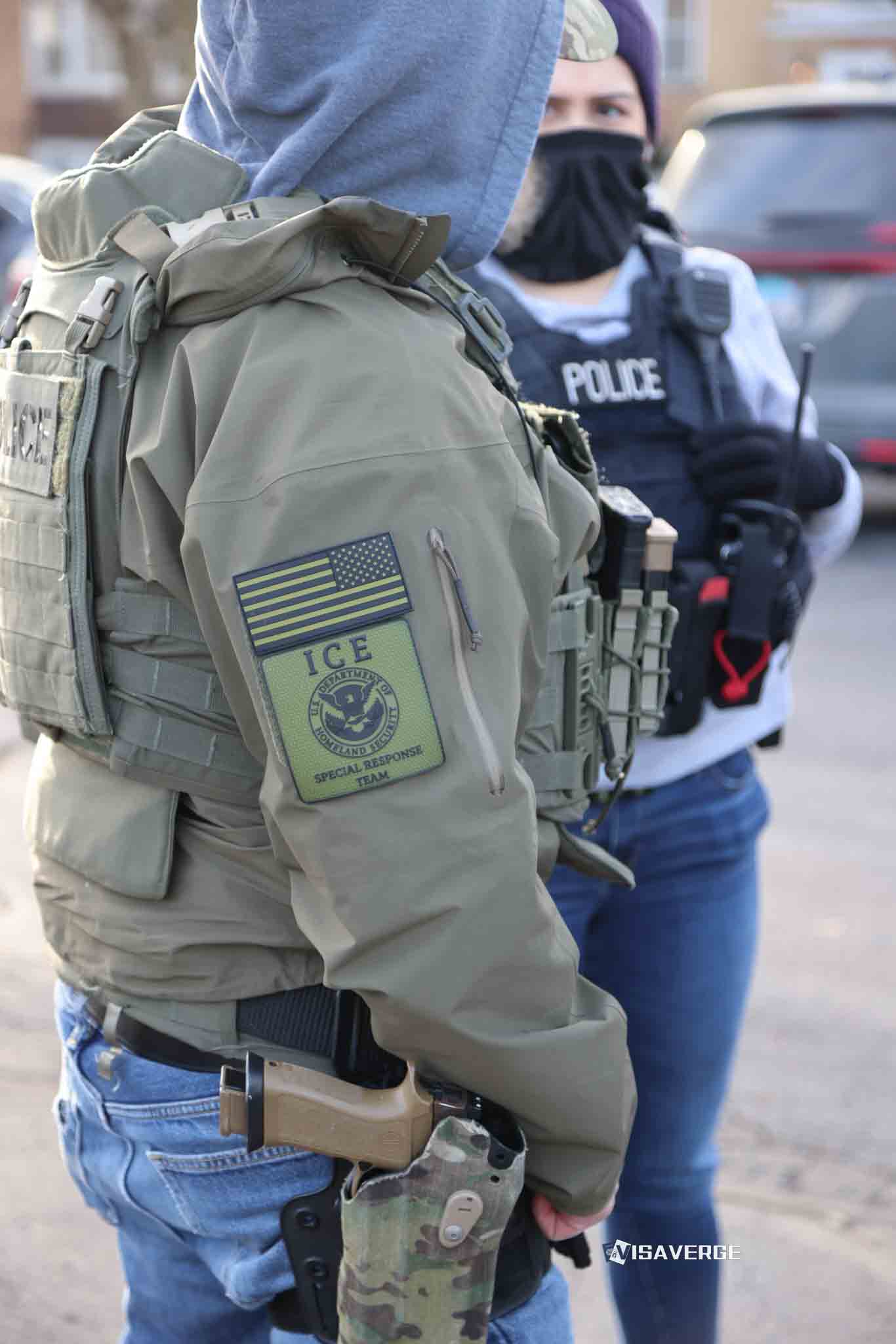
At the customs checkpoint at Boston Logan Airport, CBP questioned her about the undeclared samples and canceled her visa on the spot. Authorities then detained her, first briefly in Vermont and later at an ICE facility in Louisiana.
Petrova said she did not realize the samples required declaration and had no intent to smuggle them. Her legal fight then moved into federal court in Vermont, where jurisdiction was tied to her initial detention there.
In May 2025, Reiss ordered Petrova’s release from ICE custody, finding that detention unlawful. In that earlier ruling, the judge highlighted Petrova’s “excellent, exceptional and of national importance” research contributions to biological and regenerative medicine for cancer treatment.
A Massachusetts District Court judge later granted her work authorization in December 2025. She resumed lab work at Harvard in January 2026.
The April 7 ruling focused on the legality of the visa cancellation itself, not the separate smuggling charge. Reiss found that CBP exceeded its limited authority under immigration regulations and used the customs issue as a pretext for revocation.
That finding went to the center of the government’s action at the airport. Reiss concluded the visa was canceled because of the biological samples, and that basis fell outside what the officers could lawfully do under the rules at issue in the case.
The judge also rejected efforts to justify the cancellation by pointing to what happened after it. She wrote: “The Federal Respondents cannot justify an unlawful visa cancellation for a customs violation by relying on what transpired after the visa cancellation took place.”
That passage addressed later government actions that included refusing to allow Petrova to return to France and pressing for deportation to Russia. Reiss said those developments did not make the original cancellation lawful.
The court also noted the danger Petrova could face if removed to Russia. Reiss wrote that “her life and wellbeing are in peril.”
That point added another layer to a case that had already moved beyond a dispute over customs paperwork and biological materials. By the time of the April ruling, Petrova had spent months fighting detention, seeking permission to work, and trying to preserve her place in a research program tied to cancer treatment.
Romanovsky framed the decision as a correction to a chain of government actions that began at the airport inspection. His statement did not address the separate smuggling charge, which remains apart from the visa dispute resolved by Reiss.
The U.S. Department of Homeland Security, which oversees CBP, had not commented or indicated appeal plans as of April 8, 2026. The ruling leaves open the possibility of further litigation even as it narrows the government’s position on the visa question.
For Petrova, the chronology has unfolded over more than a year. She entered the United States in 2023, returned from France in February 2025 with the frog embryo samples, won release from ICE custody in May 2025, received work authorization in December 2025, resumed her Harvard work in January 2026, and secured the ruling on the visa cancellation on April 7, 2026.
Reiss issued the decision in Burlington, Vermont. That venue reflected Petrova’s brief detention in the state before her transfer to Louisiana.
The ruling carries weight beyond Petrova’s individual case because it addresses the limits of CBP authority at ports of entry. Reiss’s opinion said officers cannot use a customs violation involving research materials as the basis to cancel a visa when the governing immigration rules do not allow that step.
That legal distinction may matter to universities and laboratories that rely on international researchers, particularly when travel and scientific collaboration involve transporting samples across borders. The case centered on frog embryo samples intended for cancer research, but the court’s analysis turned on the scope of enforcement power rather than the scientific merits of the work.
The dispute also emerged during a period of heightened scrutiny of foreign researchers under the Trump administration. In the scientific community, the case fueled concerns about recruiting global talent and protecting academic freedom.
Those concerns sharpened as Petrova’s detention stretched on and her status remained uncertain. Her release, work authorization, and return to the lab allowed her to resume research, but the legal battle over the visa continued until Reiss’s April decision.
The court’s opinion did not erase every legal issue connected to the airport encounter. Petrova’s smuggling charge remains separate, while the visa ruling limits CBP’s enforcement scope for incidents of this kind.
That split is central to understanding the decision. Reiss did not rule that the undeclared samples were irrelevant to customs enforcement; she ruled that the agency’s response exceeded what it could do with Petrova’s visa.
The opinion also drew a line between actions taken in the moment and explanations offered later. By rejecting after-the-fact justification, Reiss reinforced that the legality of the cancellation had to stand or fall on the reasons CBP had when it acted at Boston Logan.
For Harvard Medical School, the case brought unusual attention to one of its researchers and the materials used in lab work. Petrova’s return in January 2026 meant she could resume research before the visa question was resolved, but her status remained entangled in the federal court fight.
The case has also stood out because of the human stakes beneath the legal dispute. Reiss’s reference to the risk facing Petrova in Russia showed that the immigration consequences extended beyond professional disruption and into questions of personal safety.
Even with the April 7 ruling, the practical path ahead remains unsettled. Petrova has work authorization and has resumed lab work, but the government still could seek further review of the visa decision.
For now, the clearest outcome is the court’s rejection of the airport cancellation that triggered months of detention and litigation. In Reiss’s words, “The undisputed facts reveal that Ms. Petrova’s visa was impermissibly canceled because of the frog embryo samples and for no other reason.”