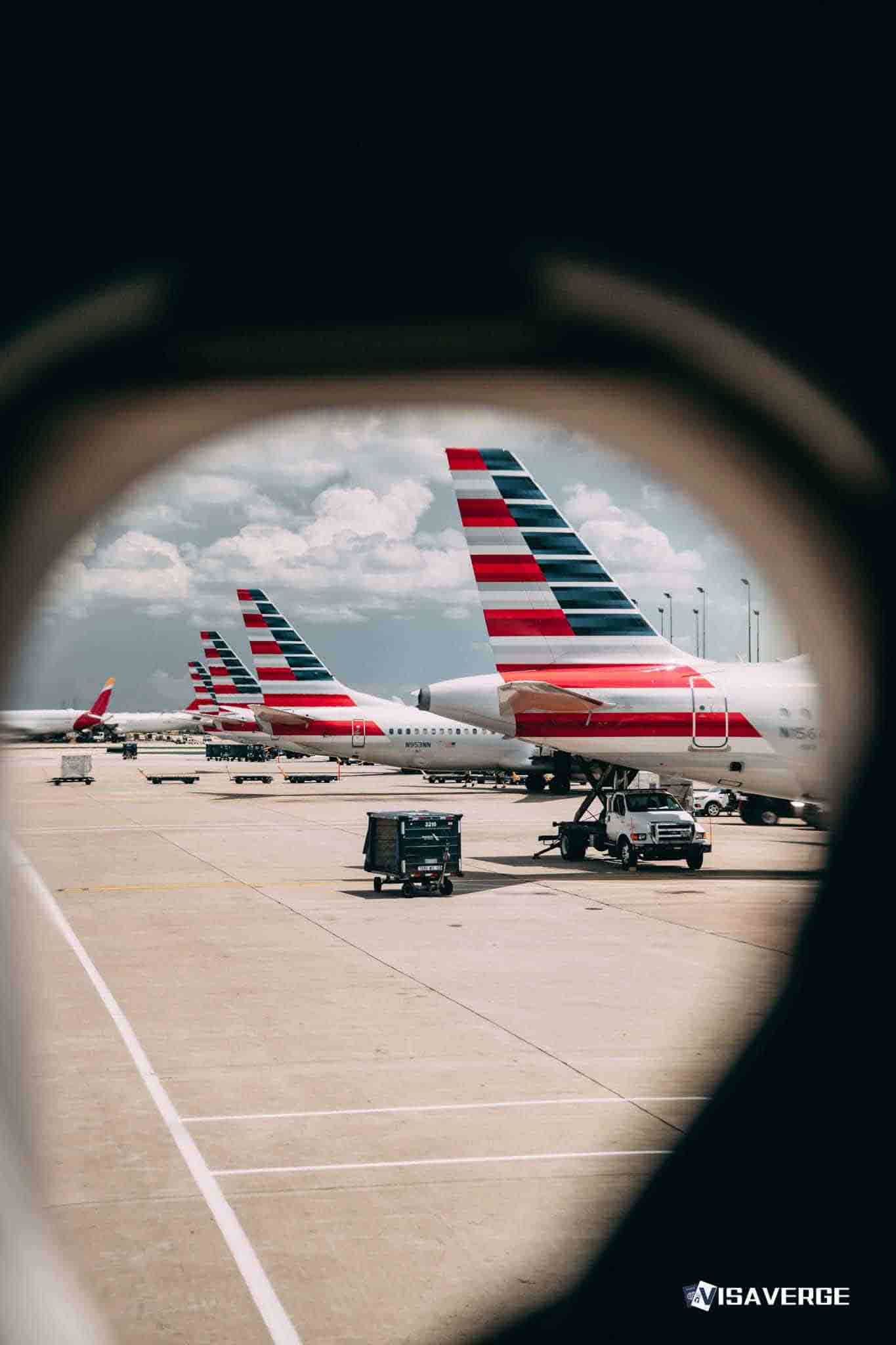
- The EU’s biometric Entry/Exit System launched for all external Schengen borders on April 9, 2026.
- British travelers must provide fingerprints and facial scans during their first visit at the border crossing.
- Authorities may use built-in flexibility to pause biometric checks and avoid long queues during peak summer travel.
(FRANCE) — European Union authorities launched the Entry/Exit System on April 9-10, 2026, bringing new biometric border checks for British travelers entering the 29 Schengen countries even as some frontiers, including parts of France, remain unable to apply the system in full.
From April 10, border authorities must carry out the new checks at all external crossing points. The system records fingerprints, facial scans and passport details when travelers enter and leave the Schengen area, replacing manual passport stamps.
British travelers do not need to complete any pre-travel registration. Border officials will carry out the registration free at the frontier, a process expected to take a few minutes per person, though queues are expected to grow during Easter and summer peaks.
The launch closes a phased rollout that began October 12, 2025 and ran over 180 days. That transition period ends with full operation by April 9, 2026, when all external borders must process passengers through EES with biometrics.
For British travelers, the shift changes how authorities monitor short stays in Europe. Instead of checking passport stamps, officials will use the Entry/Exit System to track whether a visitor has stayed within the 90-day limit in any 180-day period and to identify overstays.
The Schengen area covered by the system includes all EU states except Ireland and Cyprus, along with Iceland, Liechtenstein, Norway and Switzerland. That means the new biometric border checks will apply across a wide arc of destinations used by British holidaymakers, business travelers and families.
Some British citizens will not need to register in the same way. Those who are legally resident in Schengen countries under the Withdrawal Agreement can rely on that exemption if they present residency documents.
Elsewhere, registration is required. For most British travelers entering the Schengen area for short visits, the system becomes part of the border crossing itself.
Operational readiness, however, remains uneven. European Commission spokesperson Markus Lammert confirmed that the April 9 deadline still stands despite concerns over whether all countries are fully prepared.
Lammert said Schengen states can use built-in flexibility to pause EES checks for up to 90 days after launch. They can extend that by 60 days, ending no later than early September 2026, to cope with high-traffic periods such as summer and avoid long lines.
That safeguard reflects pressure at busy frontiers as the system goes live. Rather than forcing all crossings through one model immediately, the framework allows some borders to slow or suspend full EES processing during the first months if traffic surges.
France is among the countries drawing attention as the launch begins. Simon Calder wrote on April 8, 2026 that while some borders are processing third-country nationals such as Britons under Brussels rules, France remains well behind after six months of rollout.
At some French crossing points, authorities are still collecting only basic passport data instead of the full set of biometrics. That means the move away from manual passport controls is incomplete and that “wet stamping” is likely to continue at certain frontiers during the transition.
The effect for travelers is a mixed system rather than one uniform experience. A British passenger may encounter a fully digital process at one border and a combination of digital checks and manual handling at another.
That variation also extends to the use of e-gates. British passports may work at some points, while other borders may route travelers through staffed desks or a blended process while systems bed in.
At the main juxtaposed UK departure points for France and nearby continental routes, authorities have already prepared separate arrangements. Eurostar at St Pancras, Eurotunnel at Folkestone and the Port of Dover at Western Docks are using self-service kiosks to handle pre-registration before departure.
Those sites occupy a special place in the rollout because checks happen before passengers leave Britain. Travelers heading through those ports may complete parts of the process at kiosks before boarding, even though the overall system still counts as registration at border control rather than a separate advance application.
The UK government set aside £10.5 million for those three locations, with £3.5 million each, in an effort to limit disruption. Minister for Border Security and Asylum Alex Norris urged travelers to follow operator guidance and allow extra time.
That advice has formed part of a wider government campaign running since September 2025. Officials, travel operators and public information pages have told passengers to check port-specific instructions before departure because the process can differ sharply by route.
Up-to-date guidance is available on GOV.UK and Travel Aware pages. The message to travelers has been simple: follow the instructions for the port you are using and be ready for delays as the new arrangements settle in.
For many British passengers, one of the most immediate changes will be the collection of biometric data for the first time as part of a routine trip to Europe. Fingerprints and facial scans will be linked with passport details both on entry and exit, creating an automated record instead of a paper trail inside a passport.
That automated record lies at the center of the new system. By logging every crossing digitally, the Entry/Exit System gives border authorities a direct way to calculate how long a non-EU traveler has spent inside the Schengen area and whether that traveler has exceeded the permitted period.
The rollout also marks another step in the post-Brexit travel framework for Britons. Exemptions remain in place for those with lawful residence rights in Schengen countries under the Withdrawal Agreement, but ordinary short-term travelers now move through a border regime that treats them as third-country nationals.
Even so, EES is not the end of the changes. The system comes before ETIAS, a separate scheme expected in the last quarter of 2026 that will require pre-authorization for visa-exempt travelers.
That distinction matters because travelers do not need to do anything before departure for EES itself. Registration happens at the border, while ETIAS, once introduced, will add a pre-travel requirement for those who can visit without a visa.
For now, border authorities and transport operators are bracing for the practical effect of the launch. The busiest holiday periods are approaching, and passengers have been told to expect queues as staff and travelers adjust to the new biometric border checks.
The pressure is likely to be felt most where heavy traffic meets partial readiness. A route handling large numbers of travelers may still rely on manual steps, or switch between biometric and basic passport processing, depending on local conditions and whether a country uses the temporary pause built into the system.
That is why manual stamping has not vanished overnight. Even with the Entry/Exit System in force across the Schengen area, some frontiers are expected to continue wet stamping passports while technical and operational issues are worked through.
For British travelers, the result is a border map that is more digital but not yet fully settled. One journey may involve self-service kiosks and biometric capture before departure, while another may end with a border officer checking a passport by hand and adding a stamp.
Officials insist the launch date remains in place. Yet the first days of the system also show that “full operation” does not mean every crossing point is delivering the same experience from the outset.
Passengers heading to Europe from Britain now enter that new reality at the frontier itself: no form to fill in beforehand for EES, no fee for registration, but a new layer of fingerprints, facial scans and passport checks that will follow each trip into and out of the Schengen area.