- A federal court restored unannounced congressional inspections for ICE detention facilities, overriding previous seven-day notice requirements.
- ICE is expanding through warehouse-style turnkey acquisitions, converting industrial buildings into secure detention centers rapidly.
- Local communities use zoning and permitting levers to challenge federal expansion as no new national legislation exists.
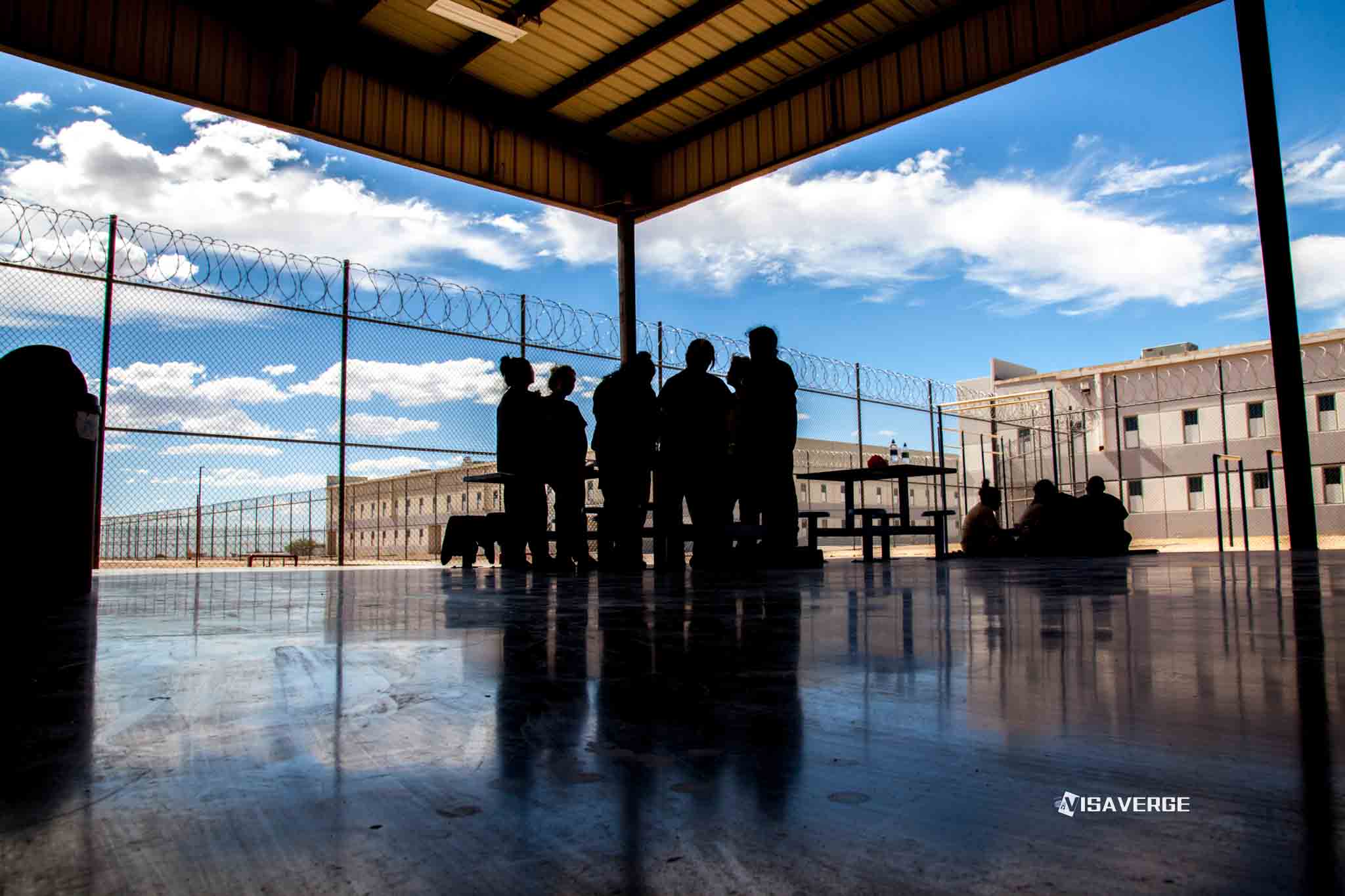
(SOCORRO, TEXAS) — A federal court’s temporary order restoring Congress’s ability to conduct unannounced inspections of immigration detention facilities is already reshaping how communities, advocates, and lawyers scrutinize the Trump administration’s rapid buildout of “ICE warehouses” and other detention centers.
Overview: ICE warehouses and the push for detention expansion

“Warehouse-style” detention expansion typically means converting industrial buildings—often former distribution hubs, factories, or large commercial shells—into secure detention sites on an accelerated timeline. “Turnkey acquisitions” generally refer to buying or contracting for facilities that are substantially ready to operate, minimizing construction time and public visibility before operations begin.
In practice, that speed can collide with local land-use rules and community expectations. Large centers and “processing facilities” can affect zoning compliance, utility loads, emergency services staffing, and health-care capacity. They also raise questions about medical care contracts, oversight access, and conditions compliance once people are detained.
At the federal level, the expansion is closely tied to budgeting and procurement choices rather than a single authorizing statute. Detention is funded through appropriations, and facilities can be added through contracting or acquisitions that do not resemble a traditional public siting process. That procurement posture matters legally because it often defines what the public learns, and when.
Warning: If a detention site is announced after a contract is signed, local officials may still have leverage through permits, inspections, and service agreements. But timelines can be short.
Current status of legislative action (as of Feb 23, 2026)
As of Monday, February 23, 2026, no new federal bill has been introduced or enacted that specifically restricts ICE’s warehouse conversion strategy or “turnkey” detention acquisitions. That absence is important, but it does not mean there is no federal activity touching detention expansion.
“No new bill” often means the battle shifts to oversight letters, appropriations conditions, agency compliance disputes, and contracting decisions. It can also mean the real limits come from litigation, state and local actions, and vendor risk calculations. In the reporting and legal materials circulating around this issue, the cited filings, document productions, and referenced record sets point to those non-legislative channels rather than a new statutory ban.
In other words, the current posture is a patchwork: appropriations and procurement decisions set the direction, while lawsuits, public pressure, and local governance shape which projects proceed. Readers should watch not only Congress, but also courts and county-level processes.
Key developments in ICE expansion and pushback
The operational plan described by officials and advocates involves scaling detention capacity through a mix of very large facilities, smaller processing sites, and “turnkey” acquisitions. Expansion at that scale affects far more than bed counts. It changes transportation logistics, staffing needs, and medical referral patterns to nearby hospitals.
A recurring friction point is contracting speed and transparency. When projects rely on specialized federal contracting pathways, including military-adjacent procurement mechanisms, the government may move faster than local communities can respond. That speed can reduce meaningful public notice before a site is locked in.
Community notification patterns described by local leaders often follow the same sequence: a purchase or contract becomes known after the fact, local officials ask for details, and residents raise concerns about services and oversight. Opposition may then pressure vendors, lenders, or local service providers to step back.
When deals “fall through,” it usually does not mean a single veto event occurred. More often, a project stalls due to permitting resistance, zoning or code issues, utility constraints, public pressure, litigation risk, or a contractor’s reassessment. The legal exposure associated with medical care, deaths in custody, and civil-rights claims can also affect a vendor’s willingness to proceed.
New Jersey statewide initiative (closest to a new bill)
The most bill-like activity is happening at the state level, where political coalitions try to block specific projects using practical levers. In New Jersey, a statewide effort led by the state’s Democratic congressional delegation signaled coordinated opposition to a proposed facility in Roxbury.
This type of action is not a federal statutory change. But it can influence outcomes by affecting permits, utilities, and local cooperation agreements. It can also shape how aggressively state and local agencies audit health and safety compliance, which matters when a detention center depends on surrounding public infrastructure.
State and local levers are not always decisive against federal plans. Still, detention centers must exist in real places with water, sewage, emergency response capacity, and workable transportation routes. Political pressure can also increase reputational and financial risk for contractors and landlords.
Calling the New Jersey push the “closest to a new bill” captures a reality: legislative-style resistance is more visible in statehouses and county meetings right now than in Congress. That is where communities often find the most immediate pressure points.
Federal court ruling on oversight
The most concrete “holding” in the current legal picture is a federal court’s temporary order pausing a policy that required seven days’ notice before members of Congress could visit detention facilities. The practical effect is that unannounced access—long treated as a meaningful oversight tool—can resume while the case proceeds.
The dispute centers on statutory oversight language commonly referred to as Section 527, enacted as part of DHS appropriations. The core idea is straightforward. Oversight loses force if the inspected entity can prepare for a week. Surprise inspections are a conditions-monitoring tool, especially for medical units, segregation practices, and intake processing.
Because the order is temporary, it is not the last word. The next steps can include further hearings, a merits ruling, compliance guidance, and appeals. But even an interim order can change behavior immediately, because facility operators must assume lawmakers may arrive without advance notice.
Deadline note: Temporary orders can be appealed quickly. If you are tracking conditions at a facility, monitor the docket and agency memos closely over the next weeks and months.
ACLU FOIA revelations and detainee context
FOIA-driven disclosures and litigation document productions often supply the missing “how” behind detention expansion. They can reveal candidate site lists, internal deliberations, and vendor communications. They also have limits, including redactions, lag times, and incomplete snapshots of decision-making.
Those disclosures have heightened sensitivity when the candidate sites include facilities with documented histories of abuse, corruption, or medical failures. Reopening or repurposing a notorious site can create immediate liability concerns. It can also complicate accreditation, staffing, and insurance.
Reports of high detainee populations and deaths in custody amplify scrutiny. They can also affect contracting decisions because medical staffing, transport to hospitals, and mortality reviews directly influence costs and legal exposure. These dynamics connect “housing” and “healthcare” to detention policy in a literal sense. Detention is a form of government-controlled housing with constitutionally significant medical-care obligations.
Warning: Families and advocates should document medical issues early. Requests for records and preservation letters may matter later in conditions or damages litigation.
Case analysis: how detention precedent fits the current expansion fight
Although the warehouse expansion story is largely about appropriations, procurement, and oversight, immigration court doctrine still shapes the human impact. Detention authority and custody decisions influence how many people remain detained long enough for new capacity to matter.
One key precedent in the detention space is Matter of M-S-, 27 I&N Dec. 509 (AG 2019). In that decision, the Attorney General limited the availability of bond for certain asylum seekers placed in expedited removal and later put into removal proceedings. Practically, decisions like Matter of M-S- can increase the detained population in some categories, which in turn increases pressure for more detention beds.
Detention authority generally flows from INA § 236 (pre-removal detention) and INA § 241 (post-order detention), with parole and custody review mechanisms depending on posture and classification. Conditions-of-confinement claims typically proceed in federal court, not immigration court. But the pipeline into detention is influenced by immigration charging decisions and custody classifications.
This is where the oversight order restoring unannounced congressional access becomes significant. If more people are detained longer under stricter custody interpretations, then inspection access can be one of the few fast oversight tools available. That oversight can produce referrals, public reports, and pressure for contract changes.
Circuit law can also matter. Federal courts have long disagreed on aspects of detention procedure, especially around bond hearings and prolonged detention. The precise rules can vary by circuit and by the noncitizen’s posture. That variability affects how detention expansion is felt regionally, including in Texas.
Broader context and criticisms
Across the country, the recurring criticism is a familiar pattern: DHS confirms scouting or planning, but withholds location details until acquisition or contracting is far along. Communities then respond after the fact, when options are narrower and costs are sunk.
The policy response remains fragmented because the levers are fragmented. Procurement is federal. Land use is local. Civil-rights litigation is federal court. Oversight is congressional. Public health and hospital capacity are local and state. That means resistance looks less like one national bill, and more like parallel fights.
It is also important to separate political statements from enforceable constraints. A press conference can signal opposition. A local resolution can build momentum. But binding limits usually come from enacted statutes, contract terms, permit conditions, court orders, and sustained oversight.
Practical takeaways for communities, families, and practitioners
Start by identifying which decision-maker actually controls the next step. That might be a county permitting office, a utility authority, a private contractor, or a federal contracting officer. Public records requests at the local level may move faster than federal FOIA in early stages.
For families and counsel representing detained people, track custody posture carefully. Consider whether alternatives to detention, parole requests, or custody redetermination options may be available given the person’s procedural posture. The best path depends on facts, posture, and circuit law.
Finally, where conditions are at issue, coordinate documentation. Medical records, detention logs, grievances, and visitation notes can matter. So can congressional inquiries and inspector general contacts. For official references, see ICE detention materials on ICE detention standards, the appropriations text history on Congress.gov, and basic statutory context via Cornell Law.
Because detention expansion involves overlapping federal and local systems, and because individual custody options can turn on small facts, consultation with a qualified immigration attorney is strongly recommended. That is especially true where medical issues, disability accommodations, or prior detention trauma are involved.
⚖️ Legal Disclaimer: This article provides general information about immigration law and is not legal advice. Immigration cases are highly fact-specific, and laws vary by jurisdiction. Consult a qualified immigration attorney for advice about your specific situation.
Resources:
- AILA Lawyer Referral
- Immigration Advocates Network