- New USCIS rules limit asylum-based EADs to a maximum 18-month validity period.
- Renewals for applicants from designated high-risk countries will be paused starting January 1, 2026.
- Initial EAD applications for asylum seekers remain unaffected by pauses and follow standard processing.
(UNITED STATES) — Starting December 5, 2025, asylum-based EADs issued to category (c)(8) applicants will have an 18-month maximum validity, with renewals from certain high-risk countries paused starting January 1, 2026, creating new planning and employer reverification challenges for pending asylum cases.
1) Overview of DHS restrictions on asylum work authorization
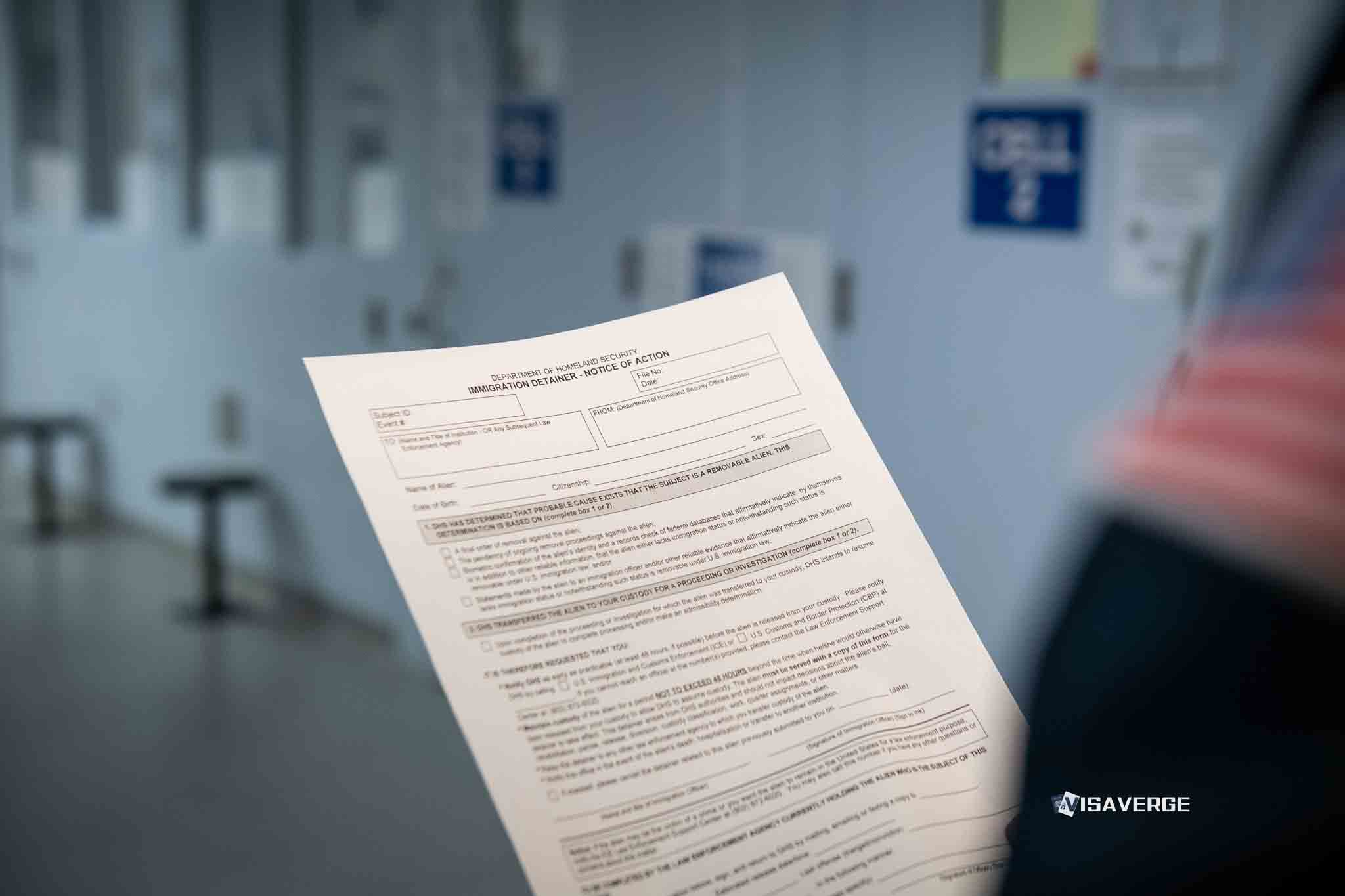
DHS and USCIS use the Employment Authorization Document (EAD) to show that you are authorized to work in the United States for a specific period. For many people with pending asylum cases, that work permit is issued under category (c)(8), which appears on the front of the card.
Two linked actions now matter for employment continuity while an asylum case is pending:
- Shorter EAD validity for certain categories, including asylum-based work authorization.
- Country-based renewal pauses for (c)(8) applicants connected to designated high-risk countries.
Both changes affect practical planning. You may need to file earlier, track receipts more closely, and prepare for employer reverification when your card expires.
What this guide covers: pending asylum applicants using category (c)(8), plus closely related EAD categories listed in the policy change (such as (c)(9), (c)(10), and A03/A05/A10). It also explains what is different for initial (first-time) EADs versus renewals, because USCIS is treating them differently.
2) Key changes to EAD validity and processing (what changed and what didn’t)
What changed: an 18-month ceiling for certain EAD categories
USCIS now limits many newly issued EADs to a maximum validity of 18 months. The change applies to EADs issued on or after December 5, 2025, including:
- (c)(8) asylum applicants with pending cases
- (c)(9) pending adjustment of status applicants
- A03, A05, A10 refugees, asylees, and withholding of removal categories
- (c)(10) and related groups included in the same validity framework
Shorter validity means your expiration date will arrive sooner. That affects employer tracking, as well as your own timeline for renewal paperwork.
What did not change: already-issued cards keep their printed expiration dates
Cards issued before the validity change typically remain valid until the expiration date printed on the card. You generally do not need to take action only because a new validity rule exists.
Renewals changed in two ways: pauses and fewer safety nets
Renewals are now the pressure point for many pending asylum applicants.
First, USCIS may pause certain (c)(8) renewals tied to a high-risk country designation starting January 1, 2026 (explained in Section 3). A pause can delay approval, even if you filed on time.
Second, USCIS ended automatic 540 days extensions for EAD renewals filed on or after October 30, 2025. : many applicants can no longer rely on an automatic extension to bridge a long renewal wait. Work gaps become more likely if a renewal is delayed.
Initial (c)(8) EADs vs. renewal (c)(8) EADs: a short distinction
Initial asylum-based EADs are the first card you get under (c)(8). Renewals extend work authorization after the card expires.
That difference now matters more than before. Initial (c)(8) processing remains on its normal track, while renewals can face added screening or pauses tied to high-risk country designations.
3) High-risk countries and renewal pauses (how the pause works in practice)
USCIS is using a designated list of high-risk countries for added review. The list can change over time. Your risk of a renewal delay may rise or fall based on how DHS updates designations.
The key rule: renewals may be paused, but initial asylum-based EADs continue
For (c)(8) renewals, USCIS can place the case into a “hold and review” posture tied to the country designation. Processing may slow down, and you may see fewer predictable timelines.
Initial asylum-based EADs are treated differently. USCIS states that initial (c)(8) EADs continue to be processed within 30 days, and they are not subject to the renewal pause approach described for designated countries.
What a “pause” can look like
A renewal pause is not always a formal denial. In many cases, it may look like:
- Your renewal is accepted and receipted.
- USCIS places the case on hold for additional screening.
- You may receive follow-up questions or requests.
- A decision takes longer than expected.
Long waits can trigger downstream problems. The most immediate is employment continuity when your current card expires.
Common confusion points (without case-specific advice)
Country designation questions come up fast in real life:
- Country of birth vs. citizenship: USCIS may evaluate nationality or citizenship for certain screening steps. Still, documents can vary, and outcomes depend on what is in your file.
- Dual nationality: Dual citizenship can raise fact questions about which nationality USCIS treats as controlling for a particular step. An attorney can help you assess how USCIS may view your documents.
- Travel or relocation: Changes in residence, travel history, or documentation can lead to more questions during review, even when your underlying eligibility has not changed.
Table 1: High-risk country renewal pauses by effective dates and status
| Country/Designation | Renewal Pause Status | Initial EAD Processing | Effective Date (pause) |
|---|---|---|---|
| Afghanistan | Paused for (c)(8) renewals | Continues (not paused) | Prior to January 1, 2026 |
| Iran | Paused for (c)(8) renewals | Continues (not paused) | Prior to January 1, 2026 |
| Somalia | Paused for (c)(8) renewals | Continues (not paused) | Prior to January 1, 2026 |
| Burkina Faso | Paused for (c)(8) renewals | Continues (not paused) | January 1, 2026 |
| Mali | Paused for (c)(8) renewals | Continues (not paused) | January 1, 2026 |
| Niger | Paused for (c)(8) renewals | Continues (not paused) | January 1, 2026 |
| South Sudan | Paused for (c)(8) renewals | Continues (not paused) | January 1, 2026 |
| Syria | Paused for (c)(8) renewals | Continues (not paused) | January 1, 2026 |
| Laos | Paused for (c)(8) renewals | Continues (not paused) | January 1, 2026 |
| Sierra Leone | Paused for (c)(8) renewals | Continues (not paused) | January 1, 2026 |
4) Exceptions and unaffected applications (who is carved out)
USCIS did not apply the renewal pause approach to every benefit type or every EAD category. Category codes matter. You can find the category printed on your EAD, and it may also appear on your receipt notice.
Start by confirming whether you are dealing with:
- An initial (c)(8) EAD, or
- A renewal (c)(8) EAD, or
- Another category such as (c)(9) or A03/A05/A10
Several items are described as carved out from the pause approach. Examples include:
- Certain law enforcement cooperation EAD categories, including (c)(11) and (c)(14)
- Form I-90 (replacement or renewal of a green card)
- Certain N-600 certificate-related cases with limited exceptions
- Some national interest waivers for critical sectors (category and filing type control the analysis)
If your situation sits near the edges of these rules, counsel can help you avoid filing the wrong form or relying on the wrong category.
5) Practical impacts and required actions (planning to avoid work gaps)
Time planning is now the center of the problem. Shorter EAD validity, no automatic 540-day extension for many renewals, and high-risk country renewal pauses can stack up fast.
Step-by-step: planning for an initial (c)(8) EAD
- Track your asylum filing date. Eligibility for the first (c)(8) EAD typically begins after 150 days have elapsed.
- Watch for asylum-clock issues. Scheduling changes or delays tied to the case can affect timing in some situations.
- File when eligible, then monitor your case status. USCIS continues to state 30 days processing for initial asylum-based EADs.
Step-by-step: planning for a (c)(8) renewal under the new rules
- Start earlier than you used to. An 18-month card comes up for renewal sooner.
- Organize identity and continuity documents. Renewals often depend on consistent biographic information and a clean paper trail.
- Plan for added screening if a high-risk country designation applies. A pause can create a long gap even when your filing is correct.
- Keep proof of filing available. Receipts and notices may matter for employer reverification steps, depending on your category and timing.
Employer reverification and I-9 timing
Employers must reverify work authorization when a time-limited EAD expires. Shorter validity raises the frequency of those check-ins. If your renewal is paused or delayed, you may face a period where you cannot show current work authorization.
Ask your employer which document they will accept for reverification, and when they schedule it. Keep copies of your EAD and receipt notices in a safe place. Do not give your employer documents you do not have.
Secondary effects to prepare for
Country of origin can draw added scrutiny in immigration adjudications. Some applicants have reported interview disruptions, including scheduling changes. Those issues can feed back into timing and stress, even if you remain eligible.
Decision path: who should consider legal review
Consider attorney review if any of these apply:
- You are filing a (c)(8) renewal and have ties to a designated high-risk country.
- You have dual nationality or complex identity documentation.
- Your case has prior denials, missed deadlines, or inconsistent records.
✅ What affected asylum-based EAD holders should do now: start renewals earlier, monitor USCIS updates, coordinate with employers on reverification timelines.
6) Policy basis and regulatory context (what USCIS cites and how it is implemented)
USCIS points to Policy Memorandum PM-602-0194 and Presidential Proclamation PP 10998 as the basis for these operational shifts. Those documents frame the “hold and review” approach for certain populations and filing types.
“Hold and review” generally means the agency may stop forward motion on a pending item while extra screening occurs. The same approach can also include re-review of certain prior approvals using a lookback concept that reaches back to January 20, 2021.
Guidance can change how cases move without a brand-new regulation. As of February 2026, DHS has not issued additional Federal Register notices laying out further asylum EAD restrictions beyond these steps. That gap can matter for how quickly procedures shift in practice.
7) Legislative and future developments (what to watch without assuming outcomes)
Proposals in Congress can add uncertainty, but you should not plan your work authorization strategy around a bill that has not become law. The Dignity Act of 2025 has been discussed as a proposal that could add limits, yet it is not confirmed law.
Focus on what you can control:
- Check official updates at uscis.gov and your case status through my.uscis.gov or egov.uscis.gov.
- Keep your renewal file ready before your 18-month card approaches expiration.
- Treat January 1, 2026 as a hard planning marker if a high-risk country designation may apply to your renewal.
This article provides general information about immigration policy changes and is not legal advice.
Readers should consult an attorney for case-specific guidance.