

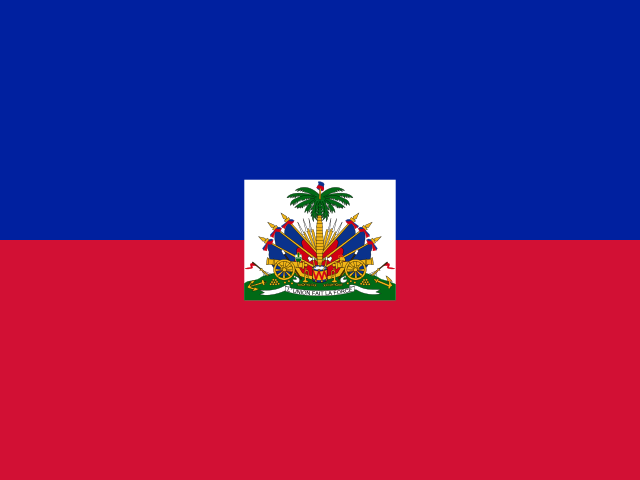
Customs
Americas
Haiti Customs Regulations
Import & export rules, duty-free allowances, prohibited items, and traveler health advisory
200 cigs
Tobacco allowance
1 litre
Alcohol allowance
← ALL COUNTRIES
Import Regulations
- 200 Cigarettes or
- 50 Cigars or
- 1 K of tobacco
- 1 Litre of Alcoholic beverages and spirits
- Small sum of perfume suitable only for personal use
- Other legal personal goods equalling HTG 2,500
- Local or foreign currency over HTG 200,000 will need to be declared to the relevant customs department before entering or leaving the country.
- Illegal drugs
- Live flora or fauna
- Fertilizer
- Weapons and ammunition – unless prior permission has been obtained
- Knives and deadly weapons
- Cats, dogs and other pets – unless prior permission has been obtained
- Macaws and parrots
- Toxic waste
- Counterfeit money and goods
- Pornographic material
- All firearms and ammunition are restricted from entering or leaving the country except for the purposes of hunting. Special permits issued by a consul of Haiti will be needed before any weapons can legally enter the country.
- Birds, Cats and Dogs will require a veterinary health certificate and a rabies vaccination before being granted admission to Haiti. Macaws and parrots are prohibited from entering the country.
- Pork and meat products from Brazil or the Dominican Republic are prohibited from entering the country.
Export Regulations
- There are currently no restrictions on the amount of tobacco or alcoholic products that can be exported out of the country.
- Illegal drugs
- Live flora or fauna
- Fertilizer
- Weapons and ammunition – unless prior permission has been obtained
- Knives and deadly weapons
- Cats, dogs and other pets – unless prior permission has been obtained
- Macaws and parrots
- Toxic waste
- Counterfeit money and goods
- Pornographic material
- No information available
Health & Security
Basic health information for travelers to Haiti
Basic security information for travelers to Haiti
🩺 Basic Health Information for Travelers to Haiti
- Tap and other local water sources should be considered contaminated and thoroughly boiled before being drunk. Travellers are advised to stick to bottled water whenever possible throughout their stay inside the country. Milk could be unpasteurised and should also be boiled before using and all dairy products avoided.
- All meat, fish and vegetables should be well cooked and served boiling hot before being eaten. Fruit should be peeled and Pork avoided.
- An outbreak of Cholera has been recently reported in several provinces inside the country and all travellers to Haiti should take care to avoid infection from untreated sources of food and water. Additional health concerns include Hepatitis A, Typhoid and Diphtheria and all visitors to the region should obtain appropriate protection from these and other diseases before entering the country.
- There is a considerable risk of Malaria in areas of the country less than 300m high. All travellers should obtain plenty of insect repellent and close clothing to reduce the chance of infection. An injection of Chloroquine may provide additional defence and travellers bitten should seek out immediate medical assistance before symptoms develop.
- Dengue Fever is present year round in the region and is caused by Mosquito bites mostly during the day and can prove deadly if left untreated. All travellers should obtain plenty of insect repellent for protection and seek out medical care if bitten and infected.
- Hepatitis B is endemic to the region and all travellers to the country should exercise great care when dealing with bloody or dirty needles or when engaging in sexual activity during their visit.
- Travellers to the country are advised against any contact with wild dogs or other animals whose bites might contain Rabies. If bitten, travellers should immediately clean the wound and seek out medical assistance to check for any signs of infection.
- The countries medical facilities are currently recovering from the devastation caused by the 7.1 Earthquake which caused much loss of life and damage to infrastructure in Port Au Prince and other locations throughout the country. All hospitals and healthcare facilities in the regions where the Earthquake struck will likely be overwhelmed and all travellers are advised against trying to obtain medicine or assistance in this section of the country.
- Any travellers to the country are advised to bring their own medicines for any special conditions owing to the potential difficulties in obtaining them in Haiti. The overall standard of Healthcare is currently very poor and limited and the standard of Hygiene in the hospitals may be of a lower quality than some foreign travellers are used to. Doctors and hospitals will often expect immediate payment for any services required.
- Complete health and travel insurance should be obtained prior to beginning any visit to Haiti and an emergency evacuation to a nearby country might be required in the event of a serious illness or injury.
🛡 Basic Security Information for Travelers to Haiti
- Owing to the continued uncertain social and political state of the country since the last years Earthquake, all travel to Haiti should be undertaken with great caution.
- Incidents of violent theft and robbery are high throughout the whole country and travellers are advised to exercise extreme caution upon entering the country. All passports and other valuable items should be kept in a safe location for the duration of their stay and obvious displays of wealth, which could serve to attract unwanted attention, should be reconsidered. Visitors should always stick to public locations and avoid travelling alone after dark. Assistance from Haitian police authorities may not always be available or able to provide meaningful assistance.
- Travel to the Port Au Prince region is not advisable owing to the extremely high level of poverty and unrest in the area. Any traveller required to enter Port-Au-Prince should do so with plenty of support and take care when travelling through the area.
- Kidnapping of foreigners for the purposes of financial gain is growing increasingly common throughout Haiti.UK travellers to the country should note that the British Government currently has a policy of non negotiation with hostage takers. All foreign travellers should carefully consider their actions and destination before beginning their journey.
- Violent demonstrations and anti government protests are a regular occurrence in Haiti and should be avoided where possible. The recent Earthquake has caused considerable disruption to the country’s political structure. The new president of Haiti is being inaugurated on the 14th May 2011 and could lead to scenes of a chaotic nature throughout the region. All travellers are strongly advised to avoid any large groups or gatherings which could suddenly turn violent and to pay close attention to the countries military situation prior to entering the country.
- The roads in Haiti are often very poorly signposted and maintained and late night travel is not advised owing to the poor lighting and the added chance of an accident. Many of the roads in the Port-Au-Prince area are still closed due to Earthquake damage and are also subject to flooding during periods of heavy rain which can make them treacherous or impassable. All travellers planning a long car journey should make sure that their car has plenty of fuel before beginning thanks to limited available supplies in the country.
- Visitors to Haiti should keep a copy of their passport with them at all times in the event of an accident or confrontation with the countries police services.
- The geographical location of Haiti often results in a large hurricanes and storms battering the country. Travellers visiting the country between June and November should be wary of intense storms which can create additional flash floods and mudslides and high losses of both life and property. Visitors to Haiti or any country in the Caribbean region should stay informed regarding the likely weather conditions throughout their visit and plan their visit accordingly.
- Earthquakes are a serious danger in Haiti with much of the country still recovering from the 2010 Earthquake which caused considerable loss of life and devastation in the Port Au Prince region. Travellers visiting the country during an earthquake should stay calm and contact the nearest foreign embassy for instructions.
- Since the recent natural catastrophe, much of the countries medical and government resources have been greatly depleted and forced to deal with the escalating levels of crime and poverty throughout the Port- Au- Prince area. The countries resources may prove unable to deal with another major disaster and any traveller to Haiti should make sure that they have obtained health and travel insurance for an airlift to a nearby country if required.
- Prison conditions inside the country are likely to be poor and uncomfortable and travellers should avoid committing any crimes or activities which could bring them into conflict with the police or security services.
- Although homosexuality is not illegal in Haiti, overt public displays of affection could draw unwelcome or hostile attention and are not encouraged.
Contact Information
For further assistance please contact the Haitian Customs authorities directly. They will provide the latest information about customs regulations and export-import procedures.
Official Website