

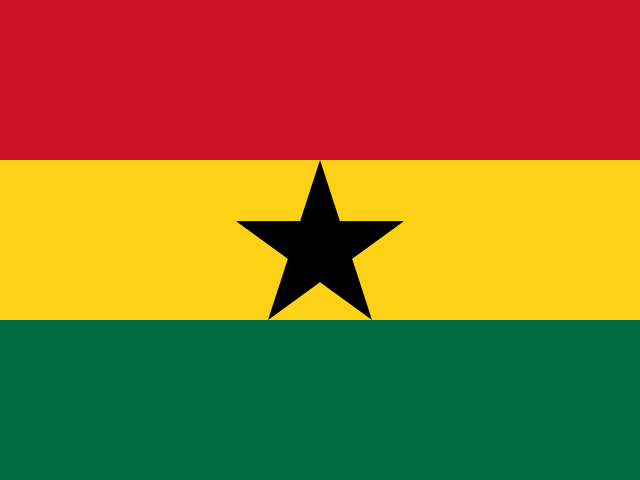
Ghana Customs Regulations
Import & export rules, duty-free allowances, prohibited items, and traveler health advisory
Import Regulations
Any rough or uncut diamonds will need a licence from the Ministry of Finance
- 400 cigarettes
- 100 cigars
- 1 pound of tobacco
- Combination of above proportionate quantities
- 1 Quart of wine
- 1 Quart of spirits
- Half pint of perfume
- There is a limit of 1,000 Ghanaian Cedi-GHS local currency which can be legally exported out of the country. Foreign currency equalling 5000USD can also be exported from the country.
- All travellers embarking in Ghana will need to pay a 50 USD Passenger service charge for international flights and a 1 GHS for a domestic flight.
- Illegal drugs
- Weapons, Explosives and Ammunition – unless permission has been obtained
- Knives and deadly weapons
- Counterfeit money
- Pornographic material
- Diseased animals and animal carcasses
- Plants and seeds – unless permission has been obtained
- Foreign soil
- Any cats, dogs or other animals being imported will require an Import permit from the Veterinary Head Office in Accra. Travellers will need to provide a veterinarian good health and rabies inoculation certificate alongside a copy of the import permit for the pet to be allowed entry into the country.
- Arms and ammunition legally entering the country will require a special permit from the ministry of the interior.
- Poultry products from certain countries will require permission from the Ministries of Trade and Agriculture.
- Live Plants and plant products will require a permit from the Ministry of Agriculture
- Any rough or uncut diamonds will need a licence from the Ministry of Finance
Export Regulations
- No information available
- Illegal or unauthorized drugs
- Weapons, Explosives and Ammunition – unless permitted to do so
- Knives and other deadly weapons
- Pornographic material
- Parrots
- There is an additional export charge on any Coca Beans or Hydrocarbon oils being exported out of the country.
- Travellers planning on exporting items via duty free will have to complete a EUR1 document if returning to any EU country.
- No information available
Health & Security
Basic health information for travelers to Ghana
Milk and other dairy products should be avoided unless pasteurised first and tinned milk advised.
Cases of Malaria and Dengue Fever have also been reported in the country and travellers are advised to obtain plenty of insect repellent and close clothing for protection and to seek out immediate medical attention if symptoms develop.
There is an outside chance of Rabies in the region from infected dog or cats bites. Travellers are strongly advised against confronting wild animals and to clean the wound and seek immediate medical advice if bitten.
Basic security information for travelers to Ghana
🩺 Basic Health Information for Travelers to Ghana
- A yellow fever vaccination is required by all travellers visiting the country.
- Milk and other dairy products should be avoided unless pasteurised first and tinned milk advised.
- All fish, meat and vegetables should be well cooked and served hot. Fruit should be peeled before being eaten and meals involving poultry products should be treated with caution owing to recent cases of bird flu in the country. Any food or drink served from vendors should be avoided for health reasons.
- Recent outbreaks of Cholera have been reported in rural areas and travellers should obtain the necessary vaccinations prior to beginning their journey.
- Water based diseases are common throughout the country including Hepatitis A,C, Bilharzia (schistosomiasis) and Typhoid and travellers should take make sure that they have obtained all the required vaccinations to these and other diseases prior to arriving in the country and to avoid contaminated food and water sources.
- Tuberculosis is highly endemic in Ghana and travellers should take if spending a long period of time in the country and seek medical advice if symptoms develop.
- Cases of Malaria and Dengue Fever have also been reported in the country and travellers are advised to obtain plenty of insect repellent and close clothing for protection and to seek out immediate medical attention if symptoms develop.
- HIV/Aids are endemic in this country and all travellers should take great care when dealing with bloody needles or if engaging in sexual activity during their visit to the country.
- There is an outside chance of Rabies in the region from infected dog or cats bites. Travellers are strongly advised against confronting wild animals and to clean the wound and seek immediate medical advice if bitten.
- Overall medical assistance is available in the major towns and cities but maybe extremely limited outside major urban areas. Important medication may prove expensive or impossible to obtain and travellers requiring certain medicines are advised to take along plenty of well labelled supplies to last the duration of their visit. Travellers visiting Ghana should obtain complete travel and health insurance before beginning their journey and may require evacuation to a nearby country in the event of serious illness or injury.
🛡 Basic Security Information for Travelers to Ghana
- Although relatively safe, travellers to Ghana are advised to take care when visiting Accra and other major urban areas. Incidents of violent theft and assault have been reported in the country and travellers should keep their passport and other valuable items in a safe location for the duration of their visit. Public displays of wealth could attract unwanted attention and should be avoided where possible. Female travellers in particular should avoid journeying around the country after dark alone and drivers should take care to avoid travelling around the country during the night where the possibility of accidents or serious crime may increase.
- There has been a significant amount of inter ethnic and civil unrest in several regions of the country in recent years, especially in the Northern, Upper East and Volta Regions. Travellers to Ghana are strongly advised to avoid any large gatherings or rallies which could easily turn violent and to obtain relevant information regarding the current political climate in the region you are visiting prior to your arrival in the country.
- Travellers planning to drive around Ghana will need to acquire an international drivers permit and keep a copy of their passport with them at all times. Primary roads in the cities may be in reasonable condition but will likely deteriorate and become treacherous elsewhere in the country. Travellers should take care to adapt to the potentially dangerous road conditions in the country before beginning any long journeys and to avoid driving late at night down poorly lit roads.
- The rainy season in Ghana falls between March and November and can cause much loss of live and property. Travellers are advised to take care if visiting the country during this period and to check the safety of the local roads which may be severely disrupted by the constant downpours.
- Travellers to the country should respect all local customs and dress codes and avoid behaviour deliberately designed to cause offence. Beachwear should be kept to the beach and all travellers should wear clothing that does not attract any unwanted attention. No civilian may wear camouflage clothing as it is reserved for the military and photographs of important government or military facilities are prohibited and can be removed and destroyed by the security services. Travellers should also remember to ask permission before taking any photographs of local buildings or people.
- Homosexuality is illegal in this country and public displays of affection by same sex couples are not advised.
Contact Information
For further assistance please contact the Ghanaian Customs authorities directly. They will provide the latest information about customs regulations and export-import procedures.