

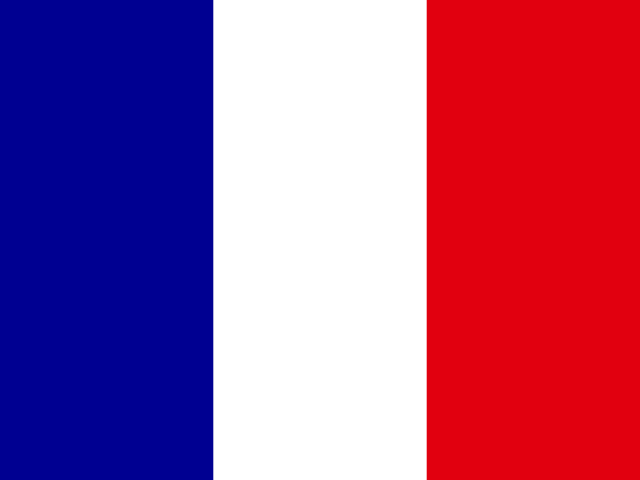
French Guiana Customs Regulations
Import & export rules, duty-free allowances, prohibited items, and traveler health advisory
Import Regulations
*Travellers importing or exporting the equivalent of 10,000 Euros in cash or travellers checks will need to declare the total sum to the relevant customs officials. All gold, except personal jewellery, over 500 grammes will need to be declared before entering or leaving the country.
- 1000 cigarettes
- 50 cigars
- 100 cigarillos
- 250 grams of tobacco
- 1 litre of alcohol exceeding 22%
- 2 litres of alcohol NOT exceeding 22%
- 4 litres still wine
- 16 litres of beer
- 50 grams in perfume
- 10 litres in car fuel – not including fuel already inside car
- Travellers importing or exporting the equivalent of 10,000 Euros in cash or travellers checks will need to declare the total sum to the relevant customs officials. All gold, except personal jewellery, over 500 grammes will need to be declared before entering or leaving the country.
- more than 5 animals
- Dangerous dog breeds
- Meat, meat products, Milk and dairy products
- Only 2 parrots and any endangered species will be prohibited from entering the country unless accompanied by a special permit.
- Any dogs, cats or other animals being brought into the country should be accompanied with a microchip, valid health certificate and a recent rabies vaccination.
- All firearms, explosives and ammunition are completely prohibited from entering the country unless the travellers have obtained either a Certificate of Possession ("autorisation de détention") or a specific Import Permit ("autorisation d’importation de matériels de guerre - armes et munitions") and can submit them to the customs department upon entry.
- The importation of these specimens is strongly restricted following the Community rules implementing the CITES-Convention. An additional export permit from the country of origin and a French import permit, issued by the Ministry of the Environment will be needed for any non prohibited plants or plant materials.
Export Regulations
- No information available
- Guns, Explosives and Ammunition – unless previous authorization has been obtained
- Knives and similar lethal weapons
- Plant and plant products
- Meat and meat products
- Illegal/ dangerous drugs
- Pornographic material
- No information available
Health & Security
Basic health information for travelers to French Guiana
There are medical facilities in Cayenne, Kourou and St Laurent du Maroni but very few elsewhere. Visitors from EU countries are entitled to heavily discounted medical treatment once they have obtained a European Health Insurance Card (EHIC). Travel insurance is advised and should be obtained prior to beginning your journey.
Basic security information for travelers to French Guiana
🩺 Basic Health Information for Travelers to French Guiana
- A yellow fever vaccination is required from all travellers one year or over planning to enter the country.
- Whilst most drinking water in the main cities is chlorinated, water found in more rural parts of the country will likely be contaminated. Travellers are urged to stick to bottled water upon entry to the country and to make sure that all native water sources are thoroughly boiled before being drunk. All local untreated milk and dairy products should be avoided where possible.
- Local meat, fish, fruit and vegetables are believed to be safe but should still be thoroughly cooked and boiled before being eaten.
- Vaccinations against water based diseases including Hepatitis A and Typhoid are advised prior to beginning your journey. American Trypanosomiasis (Chagas disease) has also been reported in the country. Travellers should take care at all times when dealing with local water sources including lakes and pools and stick to bottled water where they can.
- Malaria and Dengue Fever are constant health issues in French Guiana and are spread via mosquito bites. Travellers are advised to obtain plenty of strong insect repellent for their visit and to wear close fitting clothing where possible. Travellers infected should seek out immediate medical attention before serious symptoms develop.
- Wild animals might be infected with rabies and travellers should avoid contact with any stray dogs or cats that may have contracted the disease. If bitten, travellers should immediately clean the wound and seek medical attention to check for signs of infection.
- Hepatitis B is endemic to this country and all travellers are advised to take normal precautions when dealing with bloody needles or if engaging in sexual activity in the country.
- There are medical facilities in Cayenne, Kourou and St Laurent du Maroni but very few elsewhere. Visitors from EU countries are entitled to heavily discounted medical treatment once they have obtained a European Health Insurance Card (EHIC). Travel insurance is advised and should be obtained prior to beginning your journey.
🛡 Basic Security Information for Travelers to French Guiana
- Incidents of violent theft have been reported in the country and travellers are advised to keep their passport and other valuables in a safe place at all times throughout their visit. Travellers should also take care to avoid overt displays of wealth which may attract unwanted attention and to take care if travelling alone after dark.
- Anti government protests have recently occurred in France and although French Guinea is a distance from Paris, the danger of protests spreading exists. Travellers are urged to avoid any large groups or demonstrations which could potentially turn violent and draw the attention of the security services.
- The countries rainy season lasts from December to July and can lead to potentially deadly tropical storms. Travellers visiting the country during this period are advised to check the local weather forecasts for any potential storms that might coincide with their visit and to plan their holiday accordingly.