

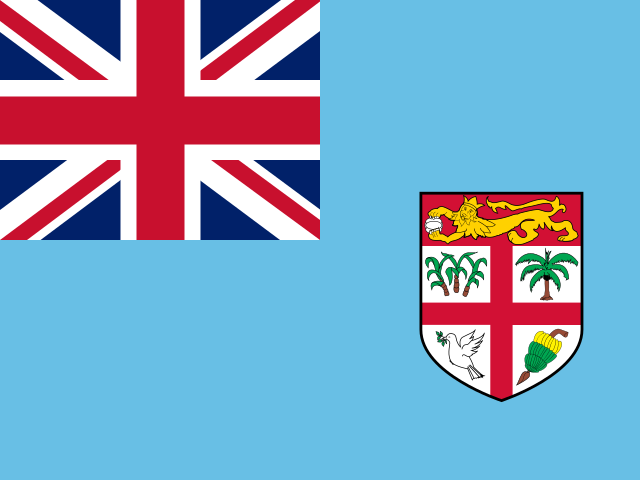
Customs
Oceania
Fiji Customs Regulations
Import & export rules, duty-free allowances, prohibited items, and traveler health advisory
$400
Duty-free limit
250 cigs
Tobacco allowance
← ALL COUNTRIES
Import Regulations
The following items can be imported tax free into the country by any travellers aged 17 or over.
Travellers may import other personal goods providing the total value does not exceed FJ$400.
- The following items can be imported tax free into the country by any travellers aged 17 or over.
- 250 cigarettes
- 250g cigars
- 250g tobacco
- Combination of above items that does not exceed 250g
- 225litres of liquor
- 4.5 litres of wine
- 4.5 litres of beer
- Items of clothing, toiletries, personal computers and other personnel effects are also free to import.
- Travellers may import other personal goods providing the total value does not exceed FJ$400.
- ALL species of birds
- All weapons including firearms, knives, swords and explosives will require a police permit before being allowed entry.
- Food, Plants or plant parts, camping equipment and biological specimens will all require a special permit from the Ministry of Agriculture and Forestry and Fisheries before entering the country. The import of meat and dairy products is not currently permitted from Tasmania.
- Cats, Dogs and other domestic pets can only be directly imported by air into the country from Australia, Hawaii or New Zealand. Travellers wishing to imports pets into Fiji will need to send their pets to one of these countries and satisfying those countries customs requirements before exporting it to Fiji from there. Travellers will also be required to fill out an “APPLICATION TO IMPORT LIVE ANIMALS INTO FIJI” form from the office of the Director of Animal Health and Production along with proof of Rabies vaccination before being allowed admittance into the country.
Export Regulations
- No information available
- Illegal drugs
- Pornographic materials
- Weapons, Explosives and ammunition – unless permission has been obtained beforehand
- Soil, sand and rocks
- Meat, poultry or dairy products – unless permitted by the Agriculture Quarantine department in the airports.
- Leisure equipment – camping gear, golf clubs et
- Valuable or rare cultural artefacts
- No information available
Health & Security
Basic health information for travelers to Fiji
Basic security information for travelers to Fiji
🩺 Basic Health Information for Travelers to Fiji
- A yellow fever vaccination certificate is required from travellers over one year of age arriving within 10 days of leaving infected areas. Travellers choosing to visit the country should obtain a vaccination to prevent additional risk of infection.
- Travellers are advised to take care when dealing with native water and to stick to bottled water for the first few weeks of your visit. Travellers using local water should make sure that all liquids are thoroughly boiled prior to use. Local meat, poultry, seafood, fruit and vegetables are generally considered safe to eat but should be well cooked and served hot. Food and drink served from vendors should be treated with caution and may have been unsafe for consumption.
- Water and food based diseases including typhoid, hepatitis A, tuberculosis, measles and mumps have been reported and travellers should obtain vaccinations against these diseases and take all necessary precautions when dealing with native food and drink on the islands.
- Outbreaks of Dengue fever have been reported throughout Fiji and travellers should buy plenty of insect repellent and wear physically close clothing to avoid risk of infection. If infected, travellers should seek immediate medical attention before symptoms develop.
- Hepatitis B is present in the country and travellers should take due care when dealing with bloody needles or if engaging in sexual activity.
- Healthcare is considered reasonable for routine medical treatments but is also limited in range and availability. Doctors and hospitals will often expect immediate cash payment for health services on offer. The main hospitals are located in Ba, Labasa, Lautoka, Levuka, Savusavu, Sigatoka, Suva and Taveuni, with clinics and medical representations elsewhere throughout the islands. In the event of serious illness or injury, travel to local countries may be required and visitors are strongly advised to obtain health and travel insurance prior to their visit. Travellers visiting the more remote sections of Fiji should take care to inform someone as to their planned destination owing to limited mobile reception in parts of the outer islands.
🛡 Basic Security Information for Travelers to Fiji
- Owing to the uncertain political situation in the country, travellers are advised to refrain from openly expressing strong political views which might cause problems or attract unwanted attention.
- Fiji is in an earthquake zone and sometimes suffers from tremors which can cause tsunamis. Travellers are urged to familiarise themselves with the required procedures to stay calm if an earthquake or tsunami occurs and to contact their nearest embassy in the event of an incident.
- Tropical cyclones are common in Fiji from the beginning of November until the end of April. Travellers are advised to monitor the latest weather forecasts prior to their visit and to find the nearest appropriate shelter in the event of a cyclone.
- Flash floods resulting in landslides and road blockages are not uncommon throughout the Fiji Islands and can strike at any time of the year. Travellers should check the local weather forecasts and avoid travelling on any roads if a flood occurs during their visit.
- The authorities take a hard line approach to possession of any illegal drugs and travels could be detained and arrested for any drugs found upon them. Possession of any amount of marijuana carries a mandatory three-month prison sentence.
- Fijians are a conservative people and topless bathing and nudity in public are forbidden.
- Despite the fact that Homosexuality in Fiji has been decriminalised by the Crime Decree, Gay and Lesbian travellers are strongly advised against overt displays of affection in public and if visiting the more rural sections of the country.
Contact Information
For further assistance please contact the Fijian Customs authorities directly. They will provide the latest information about customs regulations and export-import procedures.
Telephone
+6793243000
Official Website